Viking Biking

sign: pay attenttion, children playing

There are two ways to do Christmas, according to my husband, the Danish Way and The Wrong Way. Only he’s lived in the UK long enough to not actually say this out loud and has instead ensured that Christmas in Denmark is my preferred option through means of stealth.

So it’s the third year running that I find myself in my husband’s childhood home over the Christmas holidays, cocooned in the hygge created by my father-in-law and enjoying a week of candle lit conversation, unlimited reading time and glorious quiet, interspersed with solitary bike rides and herring focused meals with my tall and bilingual relations.

Denmark is famous for its cycling levels, and people often assume that my husband and his relations must all spend their lives cycling or thinking about it. They don’t, of course, and for many Danes a bicycle is the transport equivalent of a domestic appliance and warrants about as much interest. Cycling in cities like Copenhagen is simply easier, cheaper and more convenient than the alternatives.

View this post on Instagram

Arrived! #copenhagen #christmas #cyclinglife

A post shared by Suzanne Forup (@backonmybike) on

For the overseas cycle campaigner Copenhagen offers a unique insight into a city that continues to improve its facilities for cycling, locked into a battle with Amsterdam and Utrecht to be recognised as the world leader, resulting in most of my city photos looking this this: 

It’s fascinating city to cycle around and the first time is like entering an alternative universe that gives you the required energy to go home and keep fighting for our own version.

Whilst some of our family live in the big city, we usually stay 30 miles away in rural Zealand, surrounded by fjords and endless sky. Out here in the sticks there are not swarms of Danes battling through snow on their cargo bikes, loaded down with Christmas shopping. There are not swarms of people to start with and every driveway has a car or two, but there’s still evidence that cycling is a real transport option within and between towns and villages. 

Between bringing my own bike and my sister-in-law donating hers, I’ve had a bicycle for the holidays each year, so I’ve been able to get out and try to ride off the roasted duck at my leisure between family gatherings. 

Coming from a town in rural Scotland that can barely manage a pavement outside the town, it strikes you immediately here that there are clearly signed shared use paths everywhere – a rural walking and cycling network that connects towns and villages to schools, shops and public transport. My father-in-laws village has 300 people in it, but has paths in most directions and more planned next year. There is always priority over cars at side roads and it’s rare to find yourself moving from a separated path out onto a busy road with no cycling infrastructure to keep you from the motorised traffic. 

There are other signs that cycling here is a real and integrated transport option, with cycle racks at bus stops and cycles allowed inside the bus itself. Culture lends a hand too, with signs in the street at the start of the school year reminding drivers to expect children that ‘are new in traffic’ as the expectation will be that most children will be cycling to school. Like the UK, there are ‘children playing’ signs, but these are backed up with speed restrictions, not just hope. 

Nowhere is perfect of course and on my rides around the peninsula I’ve seen some poor infrastructure too, with paint instead of protection and some untreated paths and less than ideal roundabouts. It’s also increasingly obvious to me that the pedestrian environment, particularly for the blind and visually impaired, is inconsistent and disabling. At least that leaves Scotland with an opportunity to be a world leader if we really want communities that are inclusive, empowered, resilient and safe.


People make change

I’m surrounded by people that want change; my social media feeds are a deluge of things that need changing, from road layouts to entire nations, political leaders to our economic, food, farming, education and transport systems. I’ve even heard that there is something terribly wrong with ginger beer that needs changing (back).

Change is inevitable, difficult and can happen both at a glacial pace and whilst we are asleep. Whilst some of us are demanding it in one direction there are forces moving against it in the other and everyone has ‘facts’ to support their claims.

Just over three years ago I squeezed into a cold room with people I didn’t know and started a journey of change with them to try and transform the mental health services in our area. Only I didn’t know that at the time as I thought I was there to become a more effective cycle campaigner. Our joint work started by enabling unheard voices to be felt in a system that seemed designed to keep them quiet, and I began to see the power in simply speaking about our experiences and listening to other sides of the system.

Back in that cold room in the autumn of 2016, we were all there to participate in Ulab, an online course that promised an introduction to ‘leading profound social, environmental and personal transformation’. The words in the introductory film resonate now more than ever in this Brexit/Trump/Johnson era: “we live in an age of profound disruption, where something is ending and dying and something else is wanting to be born.”

As an election looms in the UK and we wait for something to emerge, I’ve been thinking about what I’ve been learning from my seat in the maternity ward:

Nothing changes if we don’t change

“Yesterday I was clever so I wanted to change the world, today I’m wise so I’m changing myself”

Rumi

Transformation. Disruption. Change. They were the words that had enticed me into Ulab. I wanted to create change. I didn’t realise that the biggest change would be in me, and that’s what had to change first. It’s hard learning to listen, being prepared to change not just our positions but ourselves in the process. Reflecting on my privileges and prejudices is still in progress and I’m not done yet. This year of WalkCycleVote work with RNIB Scotland has provided the uncomfortable opportunities I needed to learn about life in different shoes and then help others discover what that means for their own campaigning.

A slightly more contemporary commentator than Rumi, Darren McGarvey, in his brutally brilliant “Poverty Safari” tell us “the new frontier for individuals and movements who want to radically change society is to first recognise the need for radical change within ourselves”. It doesn’t mean we don’t give up the fight against systemic injustice but we have a duty to reflect on our own actions too and assess if they are helping or hindering us.

I’ve seen shouting ‘the truth’ at people on the internet to be as effective as shouting ‘calm down’ at my child. If we stop shouting at each other and ask what the problems really are we might find something out.

Find the joy, create the spark, start a fire

In some of my breathtakingly judgemental sessions on cycle campaigning I talk about the need to change traditional cycle campaigning with its whiff of beards, blokes, sandals and grey haired grumpiness. In reality I’m profoundly grumpy, as well as supremely angry, so I can hardly suggest that being a beacon of delightful positivity is the only way to progress. But there is something about the notion of joy that attracts and motivates, bringing people together to create change and turn from apathy or acceptance. We can often band together in a crisis, but it’s building with a positive purpose that is sustainable. Creative campaigning, highlighting what works and the occasional thank you for something good keep us motivated, finding some eye catching fun in otherwise dreary conversations about road widths, kerb heights or correcting everyone about road tax.

Innovative spaces like the Firestarter Festival can enable conversations that create sparks, opening a door to transformation and an opportunity to try our new approaches without commitment.

Between the bots and fake news, social media can help us present another world; our #FiveGoMad in Amsterdam ’roundabout film’ produced a burst of positivity that kept Claire’s notifications buzzing for weeks, creating conversations that another rant about the shocking conditions for cycling in the UK doesn’t. In these despondent times some hope in the dark goes along way and can open doors you don’t know exist.

Comrades and camaraderie

Like the solitary change-makers that went before her, Greta has shown us the individual action can have a profound impact. Showing up and speaking out are fundamental in creating change, particularly if you speak out for those that are silenced and enable others to find their voice.

But to stay the distance, and find the joy, most us will need comrades, friends, collaborators, partners or co-conspirators to plot and plan (and pedal) with. We create energy and ambition when we dream together, but it’s sharing the workload with people we don’t want to strangle when we’re under pressure that ensures we’re able to simply carry on. I’m blessed with several sets of collaborators in my life, bringing the light and lightening the load. They sustain me and our shared purpose ensures we keep responding to the likes of Strategic Transport Projects Review 2, organising events and reaching out to policy makers with our new comrades in disability organisations.

Do what you can, not everything that can be done

Advocating for change is hard, and some activist self care is critical if we’re in the long haul. What is wrong in the world can seem overwhelming and the desire to correct can be strong, particularly when lies and deceit seem to start from the places where we should be able to put our trust. In the face of the rising, global tide of hatred and the impact of austerity fighting for protected cycling space seems irrelevant sometimes. But we all have to choose our fight, for what we want to put our time and energy towards, and I’ve chosen the thread that brings me joy.

Packing the kitchen sink

I love packing and no holiday preparation feels quite as exciting as getting our Go Box down from the loft and installing the contents in panniers. Our solo parent cycle touring equipment has been refined over the last few years, mainly by trial and excessive error, so we’ve learnt something about the fundamentals. High quality, well researched, expedition comparisons of all cycle touring, camping and adventure activity equipment are available on the brilliant Next Challenge website but our solo parent experiences have led us on the following journey.

An evolution in tents (Picture 1, right to left)

We started out with what we had, which was my Eurohike 2-man tent bought 15 years ago. Weighting in at 3.5kg it wasn’t the lightest tent on the market but when you are hauling a four year old with it in a trailer an excess kg or two really makes little difference. Two Ortleib dry bags have been a good investment for containing soaking tents and dry sleeping bags (separately, if you can manage it).

In 2015 the Vango Banshee series was highly rated by the crowds at the first and fabulous Cycle Touring Festival and was purchased in great excitement, but going for the 2.75kg 3-person ‘300’ without regularly taking a 3rd person to carry it turned out to be a serious flaw. It performed well on our Orkney tour last year, but I opted to post it home before our final ride to reduce bulk on my overloaded Dawes.

Our brand new Alpkit Ordos 2 weighs 1.3kg but at twice the price of the Banshee it was only purchased after a particularly difficult day, which is when most of my impulsive financial decisions are made. Hardly bigger than the 1.5l bottle of ginger beer my son insisted on cycling around Tiree this year, it survived 25mph winds in Coll and a serious downpour in Oban.

A revolution in mats (Picture 2) but let sleeping bags lie (Picture 3)

Self inflating mats – what are they good for? Bulky and not cheap, I’ve used both Vango (orange bag) and Mountain Warehouse (black bag) ones over the last few years, not knowing that a child-inflating selection of mats was available. Looking for small and light mats that didn’t cost a fortune, I found Decathalon stock a helpfully short version, chosen by my son after a good roll around on all of them in store. Refusing to splash the £100 needed for a Thermarest that Twitter told my pal Claire was best, I went online for the Alpkit Cloudbase for my mat needs and had to fight my son off it every night during our recent adventure to Tiree and Coll.

Our cycle touring life in pictures, Aperol for size comparison

Our sleeping bags are now the bulkiest part of our kit: I’ve got a Vango Ultralight 600 and my son has a Mountain Warehouse 3 season bag that’s in need of a thorough wash and new compression sack. They do the job April through to October, but a large cash investment would be needed to take us winter camping in Scotland as far as I can see at the moment.

Sharing the load: the kitchen sink and cupboards (Picture 4)

My son’s bike was transformed into a work horse by our local bike shop so this year he was able to take his share of the load, with our Ortleib front rollers taking the strain of the kitchen equipment, cycling spares, tools and Mr Elephant on the back of his little bike.

I took the advice of Travelling Two a few years ago and invested in an Ortleib folding bowl and have found it invaluable for washing cooking equipment, clothes, a child, carrying water and dirty dishes. Equally helpful for the solo parent is the Platypus wine carrier, allowing you to ditch the glass bottle and still transport an entire bottle of wine.

The kitchen pannier also contains: a tiny Vango stove and gas cannister, Alpkit titaniumum pots (another difficult day purchase), headtorches, matches, Ikea plastic bowls, a few sporks, tea towel, small sharp knife, chopping board, a Tupperware pot or two, mugs, two plates and some pegs. (Note to self: the washing up sponge and washing up liquid bottle need replacing)

Clothes

Clean clothes have been the first casualty of solo parent cycling equipment refinement, along with washing. We managed one shower between us over 5 days on our last trip and, as far as I’m aware, no-one died because of it. Wearing wool is my first (only, to be honest) line of defence, and if you can see or smell anything untoward then you are too close to me and should move away. One spare set of clothes plus waterproofs and swimming gear is all I’m prepared to carry now unless I’m expecting to present myself to civilised company.

Don’t forget dragon capacity

Small children have the most incredible acquisitive powers – we cannot go for a walk without obtaining sticks, shells and random bits of grotty plastic. Feeling the weight of unspent pocket money, a substantial dragon was found and purchased to add to our load in Oban. Like the 1.5l of ginger beer, the smiles were worth the weight. You just don’t get that with spare pants.

My son and his new dragon

Solo parent cycling

I’m not a single parent, but in matters of cycling I’m a solo parent. Twitter and Instagram followers will recognise my spouse as the ‘Lesser Spotted Cycling Husband’ as he usually only leaves his garden en velo to perform his annual cycling duty at Pedal on Parliament or in spectacular weather conditions where not cycling would be a crime against sunshine.

It’s unsurprising then that I’ve only managed to entice my husband on two cycling holidays in the last decade – once as a carefree couple in Barra and some years later with our son on a short family tour of the Netherlands. Now our son is at school the restrictions of school holidays and annual leave prevent extensive holiday time together as a family – no matter how advanced our mathematics, two sets of 25 days annual leave don’t equal 12 weeks of school holidays. Holiday logistics are focused mainly on reducing our son’s time in childcare and piecing together annual leave, toil, the help of extended family and work related travel in a jigsaw so that everyone feels like there was a holiday at some stage during the summer.

If you’ve ever stumbled across this blog before you’ll know I love nothing more than packing my panniers and heading away on my bicycle and, using the allure of cake, ginger beer and the promise of Night Time Adventures (also known as staying up after 7.30pm), my son is currently a willing companion.

Earlier in the year I managed to swindle three child-free friends, as well as my son, into coming on a 24 hour family cycling adventure to Great Cumbrae, giving me the mental energy to reflect on the rigorous nature of family cycling as a solo cycling parent and what I’ve learnt along the way:

Practice doesn’t make perfect, but it can help avoid basic disasters

Our first solo adventure was tame by any standards, camping in our friends gardens in adjacent local authority areas was quite enough at Easter when you can never be sure if it will snow or not. It was a good opportunity to test out our kit (too big), trailer (too heavy) and cycle paths (too variable) in combination with a four year old in a safe environment where someone else was likely to offer help without triggering the fear that they may want to abduct my child. An open back door at night gave me the peace of mind that if disaster fell (it didn’t) that I wouldn’t have to cope with it alone.

The trailer, whilst cumbersome, provided storage as well as shelter on that first tour. Once that option ceased to be viable I’ve found spending money on smaller and lighter everything, plus dispensing with wearing clean clothes, has helped reduce our luggage over subsequent trips.

After the trailer, a Follow Me Tandem provided a useful tool and was used for an adventure in the New Forest, where road and path conditions were uncertain. Unusually I’d ensured it was working correctly before we left home, and provided a range of uses from towing a tired boy to tethering a speeding one.

Being an hour away from home on a train made our first solo adventure an easy option and helped refine our kit list and route assessment in the process. Being anywhere away from home is an adventure when you are four or five, and seeing the world through my sons eyes helped me see it that way too. You don’t need to go far to get away and having a train supported Plan B can give you the confidence to attempt Plan A.

I’ll take the high road, assuming I can find it

Being lost is state I find myself in all too easily, so I make particular efforts not to cycle where there are too many road choices. As the only adult in a solo parent situation there is no-one to blame but yourself if there are navigational errors made, which I don’t find add much to the enjoyment once you’ve been reminded about it 20 times by the junior cyclist.

Careful planning, using Google street view and advanced map reading, can usually ensure that people with a normal level directional sense can navigate safe routes. But I’ve found that the ‘can’t be arsed alternative’ is just go to places where they are significantly less people, and a resulting reduction in roads and cars – our last couple of summer adventures have been on Scottish islands, where we found wild open spaces, roads to ourselves and have the added bonus that it’s almost impossible to get lost.

Silence is golden, and highly unlikely

It’s undeniably a charming stage when children start to ask questions, making you think harder than ever before and testing your general knowledge to breaking point. I’m blessed with a talkative child and his curiosity about the world is a joy.

But it becomes an endurance sport when there’s three or four questions a minute and you have 14 hours alone and awake together. I’m afraid there is a point at which I cannot listen or talk any further and I have to concede defeat and let the ageing ipad do its work for 20 minutes, giving me the needed brain power not to burn the dinner, put the tent up incorrectly again or repack our belongings in an orderly fashion. Better parents engage their children in these touring tasks, but at the end of a long day I sometimes can’t find the energy to speak and cook a nutritional meal at the same time. Touring can be intense, and having some time alone but together takes the pressure off, particularly when you are both tired and at least one of you might be irritable.

It was a delight in Great Cumbrae to see my son cycling ahead with my friends, talking away, enjoying the company and attention as we pedalled along. Positive interactions with friends and strangers are one of the delights of cycle touring and it’s lovely to share those reflections at the end of the day together and help us create the story of our journey.


Our summer adventure this year provided the perfect conditions for us both in the campsite in Tiree – a small, enclosed site complete with a pack of children to play with until a remarkably general consensus decided it was bedtime. You can’t book ahead for agreeable campsite companions, but now I know it’s an option I’ll try to find some again.

Magic moments, in the miles, smiles and pouring rain

Cycle touring isn’t all easy, and part of the enjoyment is the difficult places it can take you. I’ve seen my son’s resilience and self esteem develop, just as I’ve watched him increase in confidence and stamina on his bike, pedalling up hills in the wind and rain. Like life, cycle touring is about the journey and not the destination. Exploring the world slowly with my son on our own is creating a journey together that I hope will last beyond the adventures away and into our lives at home now and into the future.

Seeing is believing

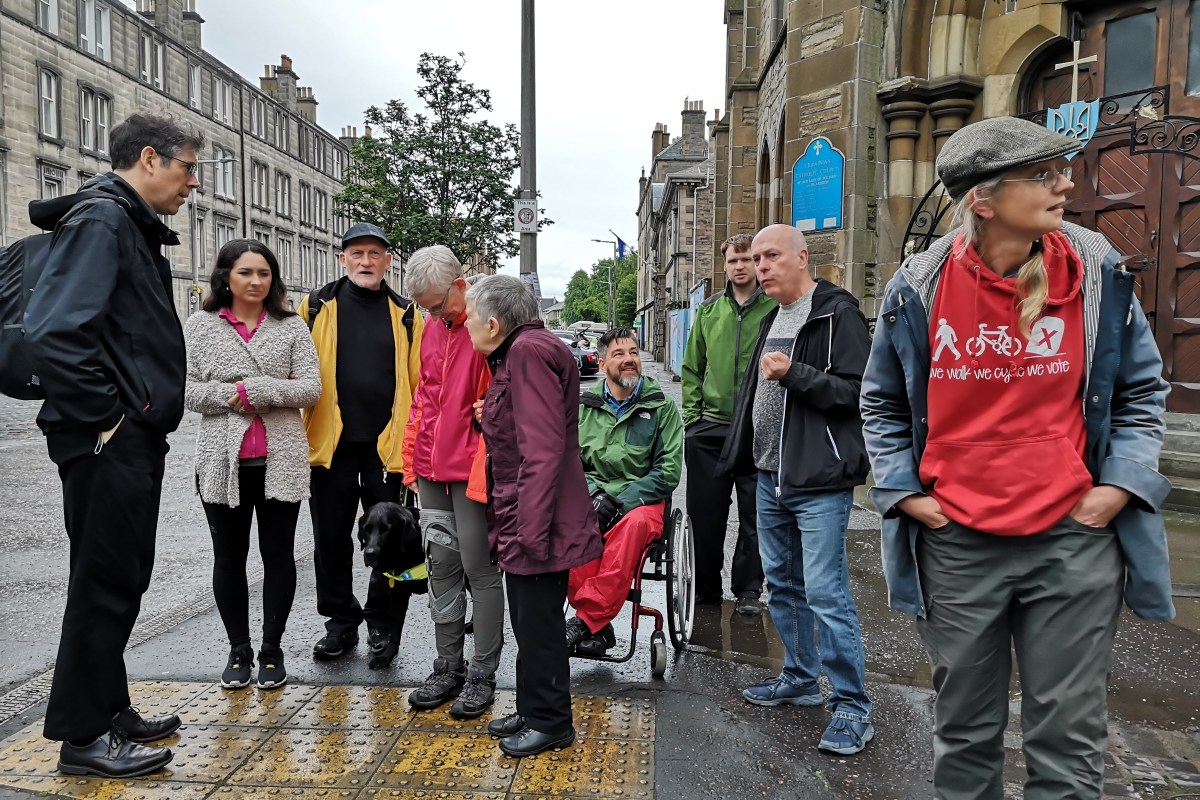
A group of people talking at a crossing

Just before Christmas I went for a walk that changed everything I thought I knew about how we design our streets for people, because I went for that stroll with someone that was blind. I heard a little a little about how tactile paving enables visually paired people to read the street, and how vital controlled crossing points are in enabling the most basic level of independence – the ability to cross the road safely. But what changed my world view was seeing how some street design, including cycling infrastructure, can compromise the safety of people with sight loss.

As a cycle campaigner I’ve been used to being the most vulnerable, the least heard and the most right. My working relationship with RNIB Scotland over the last six months has taken me on a learning journey and it’s been uncomfortable and challenging, testing what I think of privilege, equality and inclusion when the changes required might mean giving up my own power and privilege.

I still have a lot to learn, and I thank colleagues at RNIB Scotland for the patience and humour as I’ve asked stupid questions and found some answers difficult. It has not been easy to learn that some of what I have been campaigning for prevents people with sight loss from reaching bus stops safely. Hearing from Sandra Wilson, the Chair of RNIB Scotland, at each of the Cycling UK/RNIB fringe events this spring about the challenge of trying to get along the street unmolested by bin bags, wheelie bins, overhanging plants, pop-up cafes and A-boards left me in awe at the strength some people have to muster simply to leave the house.

People with sight loss need to be able to get around safely, just like everyone else expects to do. As I’ve been discovering through ”Invisible Women”, the world has been designed primarily for the needs of the Default Man – and he’s able bodied. As our urban realm develops to encourage walking and cycling we need to ensure those changes benefit and include everyone.

In the last few weeks I’ve been spending time, alongside my #walkcyclevote collaborator Sally Hinchcliffe, with visual impairment activists on the streets of three of our cities to examine the infrastructure more closely to try and understand our shared needs as well what is problematic. The RNIB have detailed information about the needs of people of sight loss from all forms of transport here but my cycle campaigner summary is:

Trust is good, but control is better: controlled crossing points are the Dutch separated infrastructure of the sight loss community – the ability to stop the traffic enables visually impaired people to ensure that it is safe to cross. Unless the other road user is a complete arse. Zebra crossings are like the painted cycle way version; when I asked one activist how she used a zebra crossing she responded with “I put my stick out and hope that I don’t get run over”.

Sharing isn’t caring: shared space – a phrase that can set even the most mild mannered raging before you’ve even tried to define exactly what you mean. It’s used to describe a range of situations where two or more of cars, pedestrians and cyclists mix together in a space that isn’t differentiated by kerbs or other road markings. Can be confused with shared paths, shared pavements and shared surfaces.

Kerb Nerd alert: people with sight loss love kerbs as much as we do, and that’s something to celebrate. Cane users and Guide Dogs use kerbs to help determine where pavements end and a road begins. The Kerb Nerds will pleased to know that there is a whole loads of height and angle chat to enjoy together, particularly when you involve wheelchair users.

Not floating boats: floating bus stops – these are bus stops with a cycle path running behind them to prevent cyclists going under buses. Unfortunately they can brings together several of the points above in a frightening combination, even where some efforts are made at tactile delineation. Bicycles are silent, bells are often unused and it can be hard to hear anything coming towards you over the roar of city traffic, even if you can hear. Crossing a cycle track behind a bus stop is like crossing a road and we need designs that are safe for cycle users and pedestrians.

Car-free isn’t carefree for all: We live with the tension that cars are a vital mobility aid for some, but their dominance of our streetscape reduces the land area we have to allocate to pedestrians and cyclists. Celebrating car free streets can show we disregard the needs of others and gives fuel to the perception of cyclists as anti-disabled. This isn’t a good look and prevents people seeing disabled people as cyclists, which they are

Both sight loss activists in Edinburgh told me that they wouldn’t go to Leith because it’s inaccessible to them, and a similar story was heard about other places and streets in each of the cities. If we forget all the problems about denoting particular types of people as ‘indicator species’, should the proof of inclusive street design mean we see a wide range of disabled people independently and safely use the whole of our cities?

The wonderful Daisy Narayanan quoted Maya Angelou at a presentation last week about the Edinburgh City Transformation Plan and it resonated with me: “I did then what I knew how to do. Now that I know better, I do better.” I hope that I can.

Feeding the 5000

I wake up most mornings and think about riding my bike, which is perhaps not unusual to regular readers of this blog but may need explaining to people who thought this was going to be about party catering and are here by mistake.

I cycle because I love it – a bicycle can turn an everyday journey into an adventure, a chore into an encounter with nature and an opportunity to create special memories with people I love. It improves my health and wellbeing, maintains my cake-based lifestyle and generates a sense of strength and resilience by challenging what I think I’m capable of.

Unfortunately, with no ‘daily commute’ my working day contains no cycling unless I introduce it – the school run is barely a walk, the shops are on our doorstep and I can almost roll out of bed onto the train platform.

Enter an entity that I had almost forsaken with parenthood – leisure cycling. Obviously, by its nature, one needs ‘leisure’ to accommodate it and this has been in short supply; a couple of years ago I could count the time I had ‘to myself’ in a few minutes a day, mainly the exhausted ones between finishing the washing up and getting into bed. This was an improvement on previous years, when I counted doing the washing up as time to myself.

Then we entered this glorious phase, where our son doesn’t need constant supervision, entertainment or containment. He can be left unattended for minutes at a time and not cause harm to himself or others. I can’t really leave the country for weeks on end, but with a husband and child happy in the garden I can take my bike out for a couple of hours and not feel too negligent as a wife and mother.

Perhaps having so much potential time went to my head, or the lack of an election made me feel I wasn’t quite stressed enough, but I managed to come out of a conversation with a friend this time last year agreeing that a ‘5000 mile target’ might just be The Thing to focus on for 2018. This random agreement has propelled me to cycle through rain and snow, wind and sunshine, at home and abroad. Despite the newly acquired leisure, finding the 527 hours has been more of a challenge than the 5000 miles; I’ve squeezed miles into the days by starting early and pedalling late, missing meals and some bedtime stories, riding into the night after the working day and ignoring housework, homework and volunteer work at the weekend.

The best miles have been with friends and involved significant quantities of cake that one just can’t justify on non-cycling adventures. I’ve celebrated birthdays with bike rides, enjoyed cycling holidays, and managed some campaigning mileage too. Occasionally these activities haven’t involved Sally Hinchcliffe:

I’ve cycled my 30 mile non-commute from Edinburgh 34 times this year, feeling epic every time I’ve done it. I’ve seen my son’s self-esteem flourish as he pedalled 70 miles over five days in Orkney and enjoyed feeling my own strength and stamina grow as I cycled over 100 miles each week. Escaping my laptop for a lunchtime spin added many miles to my total and unexpected joy into ordinary days.

As winter approached, my weekday workload grew heavy and the days darkened but Edinburgh Night Ride lit up the weekends with new routes and roads around East Lothian.

I’ve loved my solitary miles too, as time to think and sometimes not to as well. I’ve had my breath taken away by the beauty of our country, and felt my heart leap with every encounter with deer, bats, pheasants, hares and hawks.

Whilst there has been an endless stream of the best of miles, there have been no worst of miles. Even the frightening ones held some enjoyment. Later, when I’d got home.

My 5027 mile of the year was cycled in Denmark, on the cycle paths, roads and woods of my husband’s home town, which seemed a fitting end to my year of cycling (sort of) Danishly.

Far from the madding crowd

I’ve nurtured a plan to live in Venice since I first visited over a decade ago, falling in love with the light, the lagoon and the language. I was entranced by the way the water defined everything, the ease of movement provided by boats and the simply delightful absence of cars. Venetian friends provided a glimpse into the hidden corners of life away from the tourist masses, giving my first couple of visits that insider enjoyment of feeling different to the madding crowd moving in a tide between St Marks Square and the Rialto.

20181016_112907

Theresa May and Jeremy Corbyn seem determined to destroy my Venetian dream, unless I’m prepared to take radical action and swop my current husband for one originating from a more immigration-friendly EU country. With these thoughts in mind it seemed a half-term break in Italy could be the answer to my own Brexit nightmare..*

I’d delayed my return to Venice until my son could reliably walk without moaning every 20m as walking is the main mode of transport for everyone that doesn’t have their own boat. If you have working feet, legs and eyes, and the energy to use them, then Venice is a highly walkable city.  Although the tourist hoards have increased in the last decade and ramps are now covering several of the larger bridges, Venice is still notoriously car free and hard for anyone to navigate on wheels. Cycling is on the list of prohibitions, and the only cyclists I saw were children balance biking up Via Garibaldi with enthusiasm.  It’s one of the few cities I haven’t felt the need to clutch the hand of my child and shout ‘watch the road!’ in ever more frantic volumes. Boats provide the only sound of motors, and the city’s conspicuous consumption a living daily proof that you don’t need to park a van directly outside a shop to deliver goods.

20181020_140455

But Venice isn’t just Venice. There are over 100 islands in the Venetian Lagoon and access to many of them is easy by vaporetto. Frustrated by the tourist crowds and needing to give my husband a quality day with ‘the art’, my six-year old and I headed to nearby Lido, where we knew there were cars, in search of adventure on two wheels.

Off the boat and with bike hire easily arranged, we were off. Only of course we weren’t because I needed to look at a map, check Google Maps five times, go the wrong way for a while, push the bikes across the road and then check the map again. Then we were off, heading towards the beach road in an attempt to find lunch that we didn’t need to re-mortgage our house to buy. We cruised along the wide road, alternating between the familiar tension of adventure and terror as the small number of cars on the road passed rather to close to my son for my comfort. We eventually found an off road path beside the beach and enjoyed a few miles off the beaten track until hunger took us back to civilisation.

This slideshow requires JavaScript.

We consumed the cheapest lunch available in a 20 miles radius before we pedalled off to see what the main island road held for an anxious mother and her pint-sized explorer.

*drum roll and some sort of trumpeting sounds*

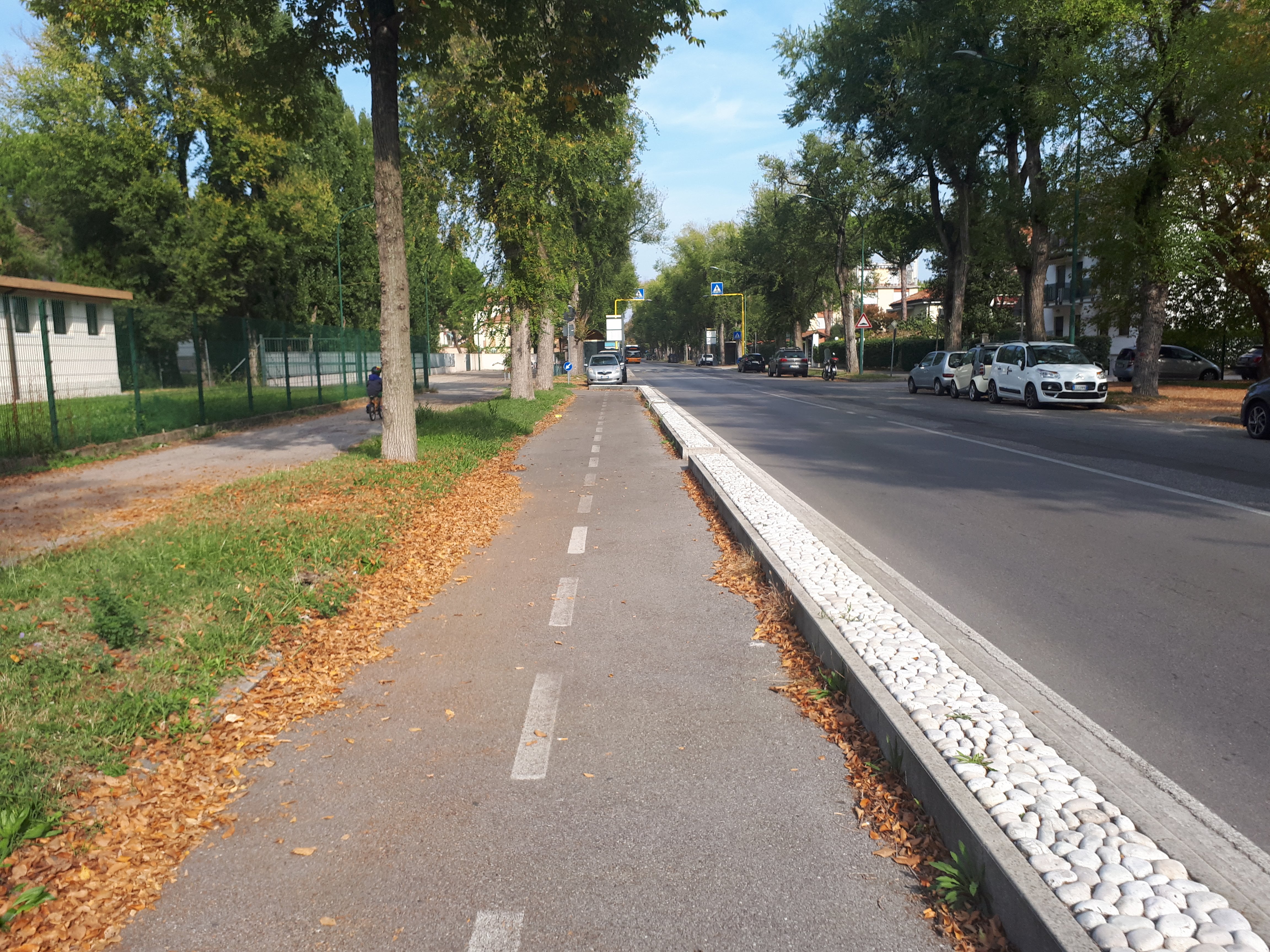
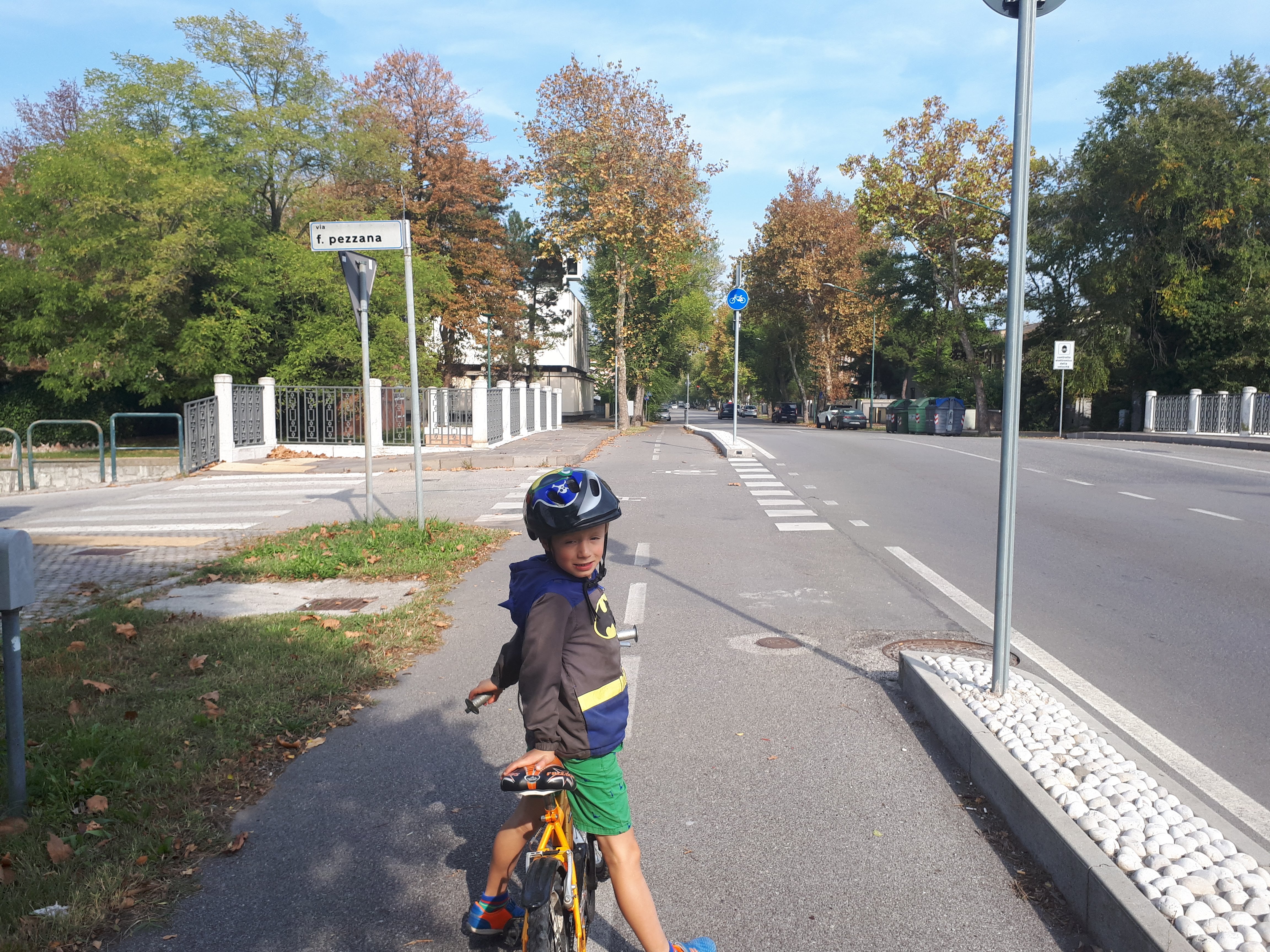
There was an on road separated cycle path. It wasn’t wide, but it was several miles long and had side road priority as far as I could make out. It eventually turned into a shared use pavement and then disappeared altogether just as you needed it to guide you safely into town. But still, little Lido di Venezia has managed what some cities don’t dare to dream of – safe, separated space along its main transport corridor. And, in these times of Brexit, climate chaos and Donald Trump, that somehow gave me hope that the future isn’t so bleak for our self-destructive species.

20181020_13190720181020_132224

*For the avoidance of doubt and to calm any relatives reading this, it is a joke


Unicorns for Everyone

“Mummy, but why are unicorns for girls?”

You get used to questions when you are parent, and my son can average four or five a minute when on good form. From cosmology ‘when did the world start?’ to biology ‘where did you get me from?’ and religious education ‘are Jesus and the Easter Bunny in the same family?’ You are soon on to them ordering their own drinks in restaurants ‘can I have a gin and tonic please?’

There is nothing that makes you look at the world afresh like living with a child that has a curious mind. Everything is quietly absorbed, even when you don’t realise it, ready to be asked at an interesting moment. “Why is that man so fat, has he been drinking too much whisky?”

We tell children how we understand the world from the moment they are born, as we ask ‘what was it?’ and purchase clothing and toys in colours and designs that we have defined as appropriate. I’ve noticed that as soon as children start to speak we’re talking princesses to one type of child and pirates to another, narrowing their worldview and aspirations before they can walk.

As a ‘tomboy’ I had no preference for dolls, ballet lessons or dresses as a child, and instead cultivated an interest in football, knives and the A Team. I have always looked with bewilderment at children’s games, clothes, activities that seemed to be sex specific, and wondered why people make generalisations about behaviour based on sex as though there is some definitive and innate difference rather than our cultural pressures.

I thought I would escape the tedious conversations about sex, gender and identity that I had as a child by having a son, as we managed to evade many conversations about childrearing simply by crash-landing into parenthood two months early, avoiding people for six months and looking exhausted for the next three years. But apparently not, and its been a depressing experiencing watching our curious, independent-minded and sensitive little boy start to absorb other people’s expectations.

Our son started reporting gender-normative comments almost as soon as he could string a coherent sentence together; his enjoyment of a witches’ Halloween dress dented by girls that told him dresses weren’t for boys. His love of pink clothing squashed by another set of determined girls that stated pink wasn’t for him either. As no doubt they will be told that science, careers in politics, the judiciary and at a senior level in the media won’t be for them, even if no-one ever says it. Their future careers may be limited, but at least they get to wear sleeves with ‘wrinkles’ instead of the ‘normal’ ones.

A ‘WTAF’ moment – girls T-shirt on left, boys on right. I bought the wrong one for the school PE kit and our son was quickly introduced to the Gender-based Sleeve Rules.

We were generously gifted around three or four years of clothes by one of my friends, so it wasn’t until quite late in my parental experience that I had to purchase anything other than shoes. Wandering, faintly horrified at the prices, around H&M one afternoon my son miserably eyed up a rack full of brown and khaki t-shirts in the ‘boys’ section and asked “why are there no sparkles on boys clothes?” In my sadness I almost bought him a pink heart sequined jumper from the ‘girls’ section, had it not been so flimsy and impractical for a Scottish winter. Not a problem for girls apparently.

Before the self-appointed Clothing Regulators started he would regularly rock the layered dress look out on his bike, this orange pumpkin dress was worn to destruction before he outgrew it:

https://twitter.com/backonmybike/status/710803119848955905

At home our son sees a reasonably gender-neural division of labour – we share the childcare and cooking, my husband deals with the DIY, bakes the cakes and nurtures the garden and I take care of the bikes, household finances and don’t know what the vacuum cleaner does. This is perhaps part of the confusion, as he’s seeing a difference between what the world is telling him and what his reality is. Where do pink unicorns fit in when your Mummy only has Rapha pink?

The unicorn incident is the most recent in regular series of discussions that usually end with my exasperated summary statement: ‘everything is for everyone, there are no boys and girls things and some people don’t feel like they are a boy or a girl anyway’. But me saying it isn’t what he needs, he needs to see other boys sporting pink heart jumpers, comparing My Little Pony storylines and every child in his school able to talk about what really interests them, not what they feel is sociably acceptable.

If all this was simply about toys and clothes it wouldn’t be so tragic, but what I see is children learning that a whole world of experiences, choices and behaviour isn’t for them based purely on their genitals. I can’t even start to comprehend how hard it must be for children and young people not to have the body that corresponds with their gender identity.

From this middle aged, cis-gendered, mother’s perspective we need to understand how we normalise gendered behaviour and decide if it helps out children thrive. I think if we want our children to have the world of opportunities they deserve we need both #thisgirlcan and #aboycantoo, enabling men and boys to get out of their gender straightjackets as well as girls and women. If we want men to be caring fathers that nurture their children, then boys need to be supported to play with dolls and men encouraged to take their full entitlement to parental leave, and if we want husbands that can cook then we need to show our sons how to prepare meals. Most importantly, if we want to stem the number of young men that take their own lives, we should encourage boys to talk about their feelings, and real interests, with their friends. Not everything is going to be solved by embracing unicorns for everyone, but it could be a start.

20180904_141537
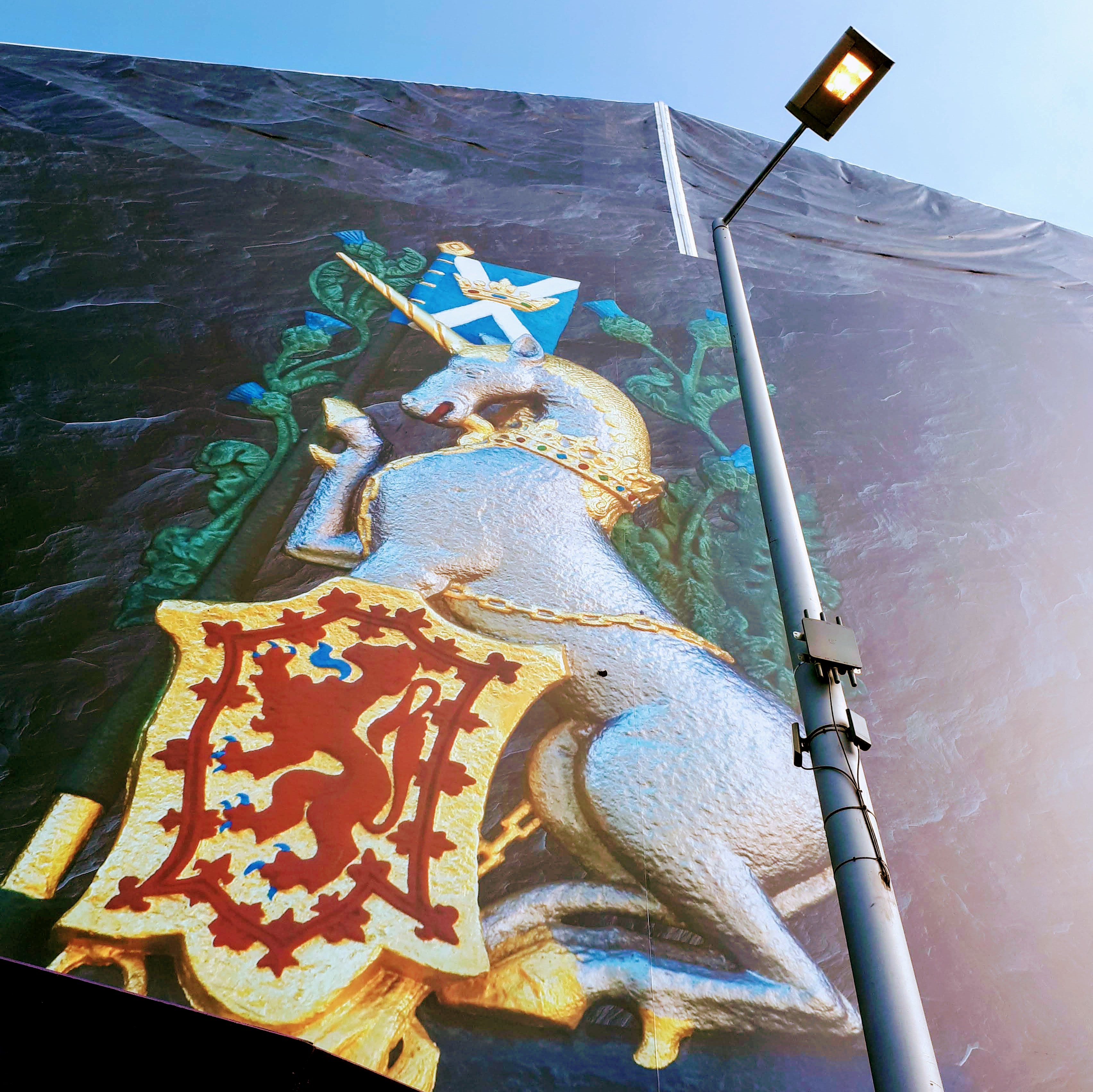
A proud unicorn, Scotland’s national animal, outside Holyrood Place


A year of living carlessly

When the text came – “Car Forup didn’t make it” – it wasn’t a shock. Our ageing Honda Civic had been threatening to die for half a decade and with every surprisingly passed MOT, our mechanic had smiled and muttered mysteriously “aye, well, its a Civic”. But not this time. Our reliable motor finally steered into the great car park in the sky last summer and wasn’t replaced.

It seems to be an expectation that when you have a child and/or you live outside a city you must be in need of a car but we found that wasn’t true for us, and this post reflects our first year of living carlessly..

Location, location location – part 1: do I *really* want it?

We live on a small town high street, with just a 5 minute walk between the train station, greengrocers and Co-op. The ‘weekly shop’ isn’t a thing for us, with most weekday meals planned and bought for in the few minutes between train, afterschool pick up and home. Not having a car means I can’t go to Tesco’s 12 miles away if our edge of town Asda doesn’t have ‘it’. If I want something not obtainable in our town it has to be worth ordering online or carrying from Edinburgh. On a good day this reduces our food waste, prevents us from buying things we don’t *really* need and insulates us from the ‘pester power’ emanating from our 6 year old. On a bad day it means I wander around the Co-op unable to think of a single thing to cook, having already used up all my brain power during the working day.

Location, location location – part 2: childhood freedom

It has been a revelation in recent years to find out how much parental time is dedicated to the transportation of children, not just to school but to afterschool activities – ballet, horse riding, Cubs, gymnastics, swimming, judo; an actual endless list if you have the resources. Thankfully both my husband and I subscribe to the can’t be arsed parenting theory and we’ve limited our son’s programme to two classes a week that we can walk or cycle to, preferring to encourage free play with friends.

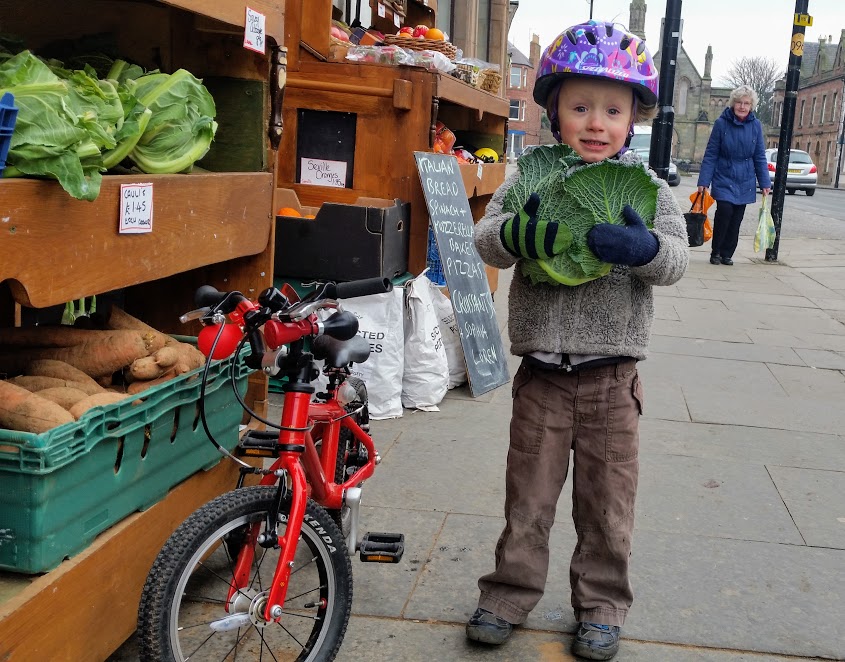
He might be missing valuable horse riding experiences, but our High Street location enables our son to go to our closest shop and buy milk (or cabbages..) without crossing a road. Judging by the screams of delight from a gaggle of friends staying over recently, it’s not something many six-year-olds are able to do and is an adventure of its own. We are within easy cycling distance of school, the sports centre, swimming pool and community centre so I’m looking forward to years of not being an unpaid taxi service whilst our out-of-town friends continually ferry their offspring around.

Is your journey really necessary?

We have quite a lot of middle-class privilege going on in our household, with our four degrees and management jobs we decide what our schedules look like. We aren’t tied to desks at a particular time, although the flipside of this flexibility means that you’ll often find us both working at different tables in the evening or in different cities. What it also means is that we can work around the ‘rural’ train service from our part of the world, reaching Edinburgh about 45 minutes after school drop off, rather than joining the queue of cars on the Edinburgh Bypass each morning.

In theory I work from home, reducing unnecessary travel, but in practice this is usually ‘working from train’. Some mornings I stand at Edinburgh Waverley looking at the two tides of people struggling past each other to get on/off the Glasgow train and wonder if people are going to vital meetings, or just to sit at desks in another city.

The ‘Beast from the East‘ should have provided an opportunity for us to reflect on our need to travel, with the (then) Transport Minister asking almost everyone in Scotland individually if their journey was essential. The question really is ‘essential for who’? For your boss to keep an eye on you, or for you to carry out your work? I appreciate that many jobs need you be there – heart surgeons really need to show up, but for keyboard warriors like me the Beast had negligible impact on my productivity once our child was occupied and I stopped looking out of the window.

A real excuse for n + 1?

The cargo bike is widely recognised by civilised countries as the ‘second car’ for families, or simply a car-replacement for those wanting to drive anti-cycle lane campaigners out of their minds. However, my husband’s Danish genes must have gone off after so many years out of Denmark so instead of a Christiania or Nihola entering our lives, this thing turned up:

As its ‘challenging’ to use on hills, and has something fundamentally wrong with the breaking mechanism, it’s had limited use this year and has been mainly clogging up the shed.

Mobility as a service

Car Forup wasn’t an expensive car to run, with about £50 tax and insurance going out each month and no significant bills that we can remember. But he didn’t run very often, so as a sedentary extension to our storage capacity (he was mainly used by me to leave things in) he wasn’t providing good value.

We joined the local car club, Co-Wheels, for journeys that we really wanted to do by car but looking through our bank statements we’ve spent less than £90 on Co-Wheels over the last three or four months months. Our most expensive usage this year, at £50, was for a long weekend camping in the Lake District, mainly due to our child needing to bring this ridiculous creature:

A year on and we have no plans to replace Car Forup, which is just as well as I spent every penny we have on this beauty

Ancestral cycling

My great-great-grandfather was born in Orkney, gifting me a slender genetic connection to the country I call home, and providing my son with another dose of Viking heritage, which might explain his passion for pirates. I love the wild, raw beauty of the Orkney Islands – it’s unlike anywhere else, but with strong, gusting winds, a temperamental ‘summer’ and almost no cycling infrastructure. It might not be an obvious choice as a family cycling destination. But really, who wants to read another blog about safe and easy cycling holidays in the Netherlands?

Aberdeen and losing the will to move

We started our journey by train from home in East Lothian to Aberdeen, where the nice people at NorthLink ferries let you roll on with your bike and take you to Orkney (or Shetland if you fall asleep) for a surprising small amount of money. Unfortunately this means going to Aberdeen with your bike, which should not be undertaken lightly. I was pretending to be an organised cyclist, so the usual train/bike/booking tension didn’t arise but Aberdeen presents significant mobility challenges to anyone not encased in a metal box. After several attempts to escape the train station, on its island in the sea of traffic, we gave up and spent our two hour wait outside on the station plaza. We decided that it was less damaging to be surrounded by toxic fumes than risk the more imminent danger posed by the cars. My son, a cycle campaigner of few words, provided a summary comment for Twitter:

20180705_151802

Once boarded, it was literally plain sailing and six hours later we were in the “not dark at 11pm” excitement of Kirkwall where I demonstrated my powers of organisation again and had a taxi waiting to whisk us to prepared youth hostel beds.

Weather with you

This was my fourth visit to Orkney so it was obvious to me that the resident weather gods had recently gone AWOL, leaving Orkney to enjoy a rare summer of sunshine and low wind speeds. On previous trips I had wondered how people managed to walk anywhere, let alone cycle, as you have to brace yourself against the wind to stay upright for eight months of the year.  To increase our chances of not being cold, wet and windswept at the same time I’d booked two nights camping and two nights in a wooden chalet at the superb Pickaquoy Campsite plus the initial youth hostel room and a final night on the boat taking us south again. This regular movement maintained the feeling of cycle touring without going very far, and indulged my passion for packing. Posting our tent home after use reduced our luggage and enabled the purchase and carriage of a large quantity of puffin related items home.

Bikes + ferries = simples

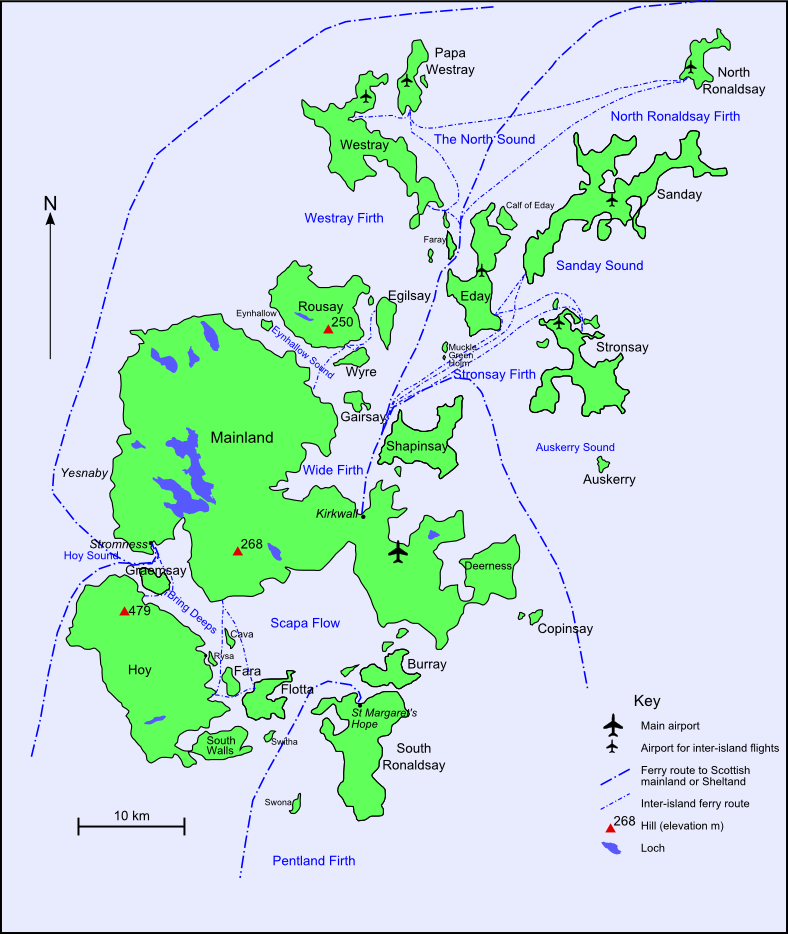
Orkney is a collection of 70 islands, 20 inhabited, spread 50 miles from north to south and 10 miles off the mainland of northern Scotland.  You can fly between some of them but for us the boat and bicycle combination was magical, transforming each journey into another part of the adventure.

Orkney_Map
Orkney map by Mikenorton – Own work, CC BY-SA 3.0, https://commons.wikimedia.org/w/index.php?curid=7876975

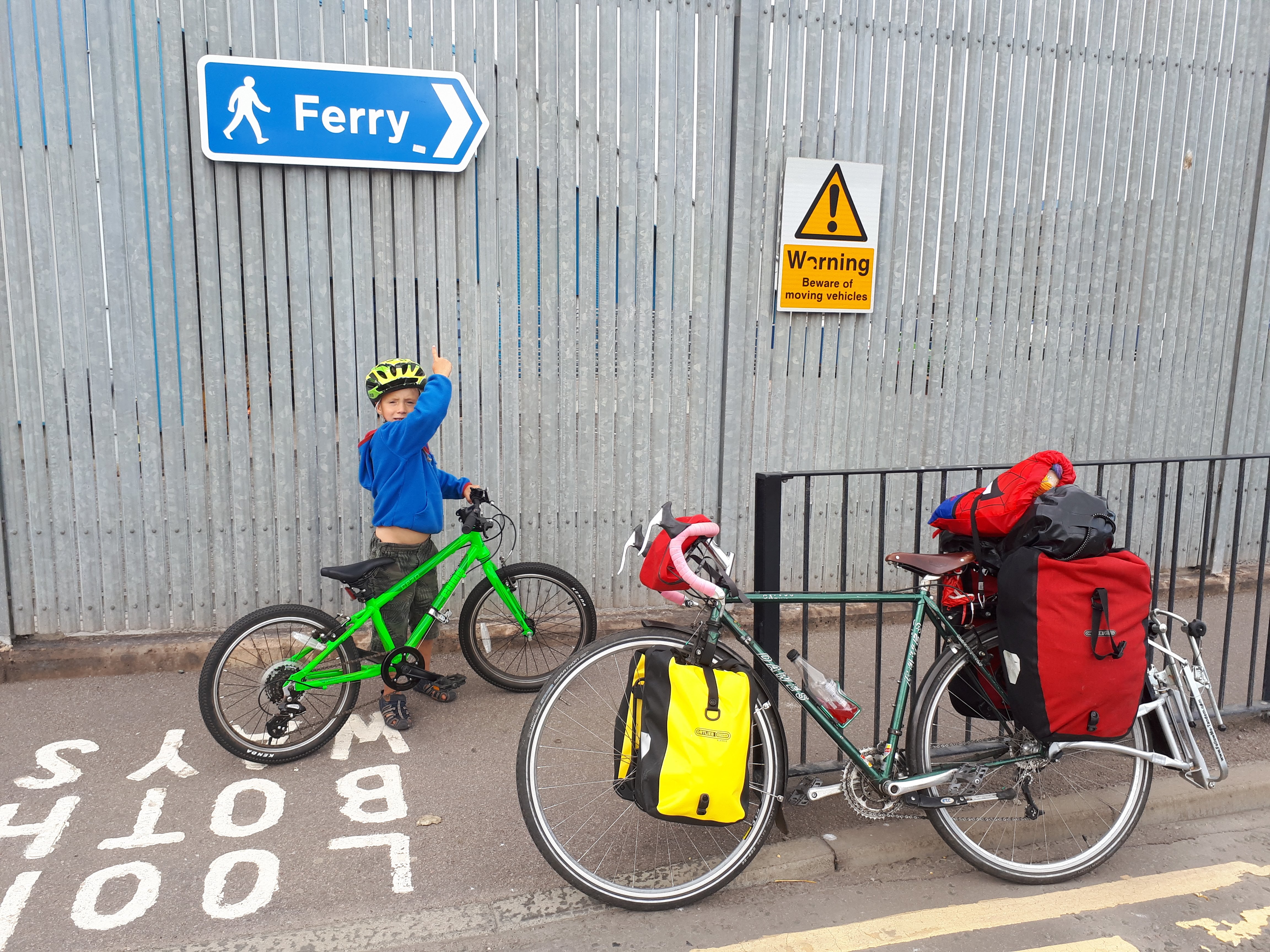
We visited two islands, Sanday and Shapinsay, on different days and found they were perfect for family cycling, with low levels of traffic and barely a hill. With very little wind we were able to cover the miles easily, enjoying the wild, open landscape almost alone on the road. The ferries were easy to find, simple to take bikes onto and had adventure written all over them. No booking, no bother. <insert irate comment about bike booking policy on trains here>

We found shops, cafes and a pub for refreshments plus locals that were keen to talk and share their experience of living in this wild, beautiful place. My son chased a male chicken with a new found friend of the same age on Sanday, giving him the ideal opportunity to shout ‘it was a cock!’ repeatedly at dinner later that day.

Mainland manoeuvres

Mainland Orkney, home to 75% of the 21,000 population, proved more of challenge to cycle around than the smaller islands. Cars dominate the two main towns, Kirkwall and Stromness, and the cruise ships provide a regular influx of coaches on the narrow roads. Unlike our part of Scotland (which has a network of low traffic roads in addition to the main roads) the main roads are often the only roads, leaving little choice for finding a family friendly route.

For a small town it’s remarkably hard to cross the road in Kirkwall and quite easy to find yourself surrounded by cars on a road that looks like its pedestrianised. I’m aware that the weather gods decree that walking is an endurance sport for much of the year, but it seems a shame that its isn’t easier to get about this lovely town. There have been plans presented to improve conditions for walking and cycling and I hope that eventually Kirkwall will be able to show off its highlights free from vehicles impeding the views.

This slideshow requires JavaScript.

Not separation anxiety

One of the main considerations of the week was how to get ourselves from Kirkwall to Stromness for our ferry south. After canvassing the opinion of everyone we spoke to, including a Dutch born Orkney resident that stopped us in the street to tell us we were ‘very brave’, I decided on the longer, hillier route to avoid as much as possible of the fast and frightening A965*. I rationalised that an exhausted child was better than a squashed one in any circumstances. However, I underestimated the Viking potential and my 6 year old sped through the 18 miles, only concerned that we hadn’t managed to get through many of the snacks we’ve purchased for the journey.


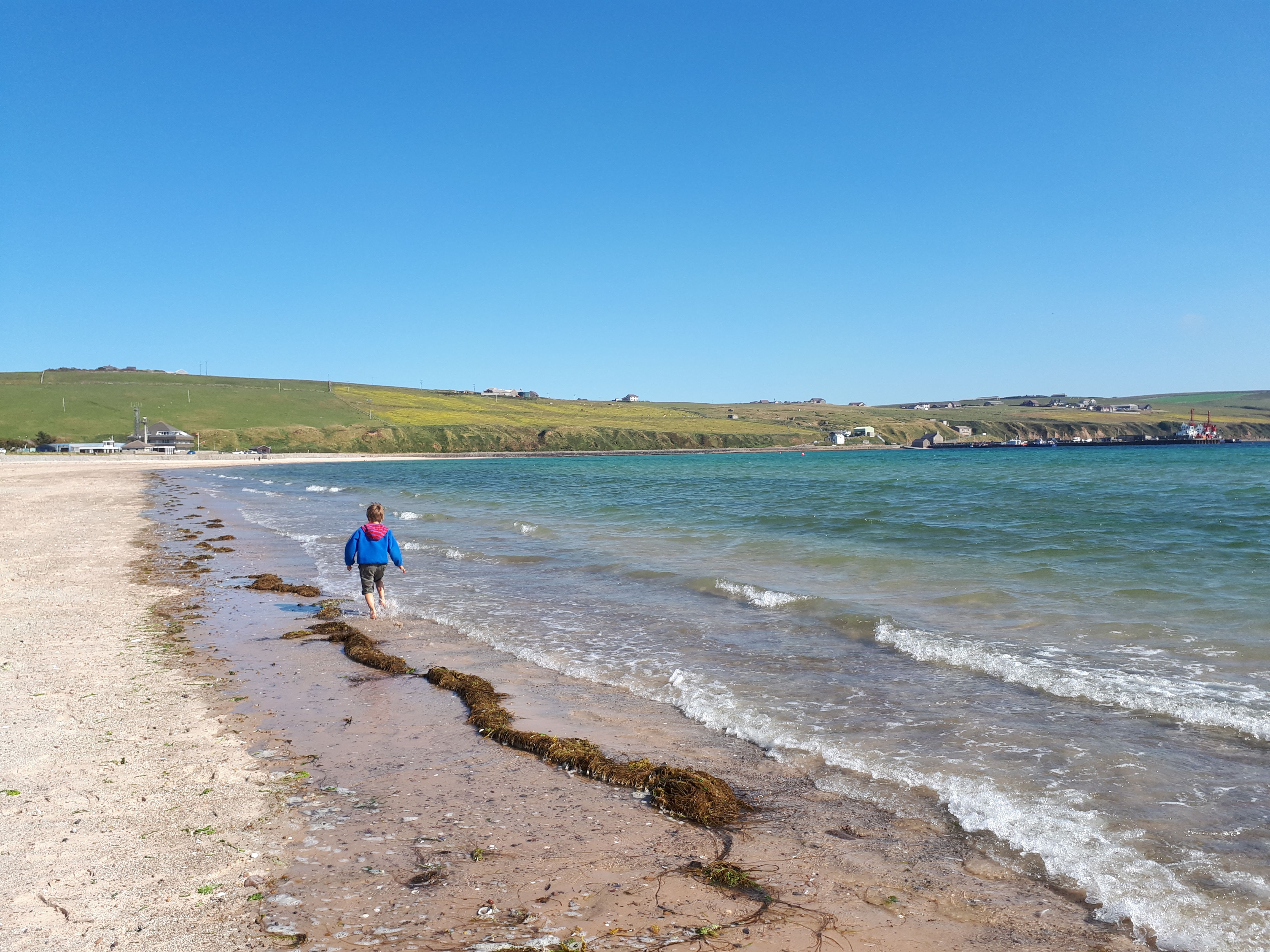
Orkney doesn’t have the cycling facilities of the Netherlands, reliable weather or the dramatic mountain scenery that draw so many people to Scotland. But the sense of freedom, of being alone on the edge of the world, sandy beaches with turquoise sea and islands where no one thinks to lock a door – that’s worth coming back on my bike to visit again and again.

20180707_163348

*There is a desire from the Council to provide a separated route on the main road, linking the two towns and providing an excellent opportunity to increase cycle tourism. It would be an expensive undertaking per capita of population, but one that could start to put Orkney and its raw beauty of the cycle tourism map. Ebike facilities and an off road route around the main neolithic sites are also being discussed, and all these could enable Orkney cycle tourism to flourish outwith the main tourist season.

Disclaimer: I did meet several political representatives from Orkney Islands Council whilst on holiday and should declare that they gave me a lovely cup of tea, as well as a fascinating insight into some of the planned cycling developments.