Treasured Islands

As a firm believer in the power of lists it was a delight to come across ‘The Scottish Islands’ when I started to think about our next island adventure after Tiree and Coll in 2019. Hamish Haswell-Smith spends the first few pages defining the characteristics of what he has decided to declare an ‘island’, and no doubt received substantial correspondence on the matter until his death in 2019. Islands with fixed links (e.g. bridges) are not included, neither are land masses of less than 40 hectares. Even with these restraints he has listed 168 islands, complete with historical, geological, population and visitor information. Even more generously, Haswell-Smith has included the details and descriptions even where the island is not an ‘island’, helping ‘The Scottish Islands’ weigh in at 532 pages.

In a homage to Haswell-Smith’s epic list making, and decisive rule creation, here is ours, which I’ll update and perhaps rearrange as we adventure further. I’ve included only those that mini-cyclist and I have visited together, and divided the list into islands visited by bicycle and those visited without. I’ve also listed the islands that aren’t defined as ‘islands’ by Haswell-Smith, although these aren’t included in the island count. Our plan, assuming mini-cyclist wishes to continue cycle touring with his mother, is that we visit all of Scotland’s 93 inhabited islands by the time he leaves school.. and perhaps all 168 over my lifetime.

  1. Arran (2022)

Easily accessible from central Scotland by train and ferry, Arran is a popular destination for cyclists, many beasting the Five Ferries route or hurtling around in one day. Our more leisurely trip in 2022 was blessed with sunshine and low wind, and provided an excellent lesson in the use of reliable milk containers. A circumnavigation over two nights gave us some time for exploring, but another few days are needed to visit some of the island’s attractions. We’ll undoubtedly be visiting Arran again, not least because we need to land on Holy Isle, off the coast of Lamlash on the east of the island.

2. Bute (2020, 2021, 2022)

Beautiful Bute provided the perfect pandemic escape in the autumn of 2020, before the doors to adventure closed down again. We’ve been back each year since to explore further and enjoy the (now) familiar away from home. Another island easily accessible by train and ferry, Bute provides good cycling conditions where you are never too far from a cup of tea and slice of cake. Make sure you go to the lovely Mount Stuart, an absolute architectural jewel (with a cycle rack right outside the front door) in beautiful grounds.

3. Great Cumbrae (2019, 2021)

We took three child-free friends on our first tour of Great Cumbrae, giving me some time to think about the difference between solo parent cycling and touring with other adults on hand. Great Cumbrae is the perfect place for a first foray into island exploration by bicycle from the central belt: low levels of traffic, easy to access by public transport and close enough to home to leave at breakfast and be on the ferry by lunchtime. Its only lack is a campsite, although we enjoyed our luxurious stay at the Cathedral of the Isles and our more spartan nights at the Field Studies Council

4. Kerrera (2019)

We barely touched our tyres down in Kerrera, but we didn’t say anything in our rules about length of stay! But as Kerrera is just a short hop over the water from Oban, where so many island adventures start, I suspect we’ll eventually get to the famous Kerrera Tea Garden

5. Tiree (2019)

Our cycle tour to Coll and Tiree was mini-cyclists first outing with his own panniers, which made a significant difference to his ownership of our journey and the provisions we carried. Mini-cyclist found a pack of children to roam with at the campsite, paddled in the freezing sea and we heard corncrakes in the night. It’s a truly magical place and our only regret was not staying for longer.

6. Coll (2019)

Coll is just a short ferry ride from Tiree, and considerably more undulating than advertised. We saw few people once we were out of Arinagour, making it feel wonderfully wild and remote. Highly recommend watching the world go by outside the Island cafe.

7. Mainland – Orkney (2018, 2022, 2024)

Orkney’s 28 islands on the Haswell-Smith list means we should get to know the Orkney mainland well over the next decade. It was our first island adventure, when mini-cyclist was just 6, and (partly) proved my theory that cycling on islands would be easy and safe for all concerned. In 2018 we stayed in Kirkwall, left the bikes behind to visit several of the UNESCO sites and took day trips to two of the other islands. We enjoyed our stays at the large and popular Pickaquoy Centre in Kirkwall, which is perfectly placed for the midnight arrival from the Aberdeen ferry, but we lost our hearts to Stromness in 2022 due to the welcome at the small Point of Ness campsite and superb Stromness museum.

In 2024 we were back to explore part of the Mainland we’d not visited before, on the hunt for archaeology, ancestors and puffins. Birsay was a real treat, with new friends in tow we explored the cliffs of the Brough of Birsay and sampled the indoor delights of the youth hostel after days of rain. Big shout out to Palace Stores that let me off with our messages without paying, and to the Birsay Antiques Centre for their welcome.

8. Westray – Orkney (2022)

We had puffins on our mind in 2022 and a colleague recommended Castle O’Burrian in Westray as the place in Orkney to get up close and personal to these charming birds. Unfortunately they love cliff edges and I don’t, so most of our interactions with them included my hysterics as mini-cyclist sidled closer towards the edge and further away from me. Don’t let my overanxious health and safety assessment put you off this lovely island – we really enjoyed staying at the comfortable Chalmerquoy campsite, pottering around the Westray Heritage centre to see the Westray wife, and mini-cyclist loved talking to the proprietor at Richans Retreat, a cosy cafe by the ferry terminal.

9. Papa Westray – Orkney (2022)

Papa Westray is flourishing, with its small but determined community improving facilities and creating an enticing location for tourists. We camped at the comfortable hostel, enjoyed replenishing our provisions at the local shop and explored the beaches, cliffs and archaeology. Our visit was made special by the friendly hostel occupants, one group inviting us to share their scrumped rhubarb and ice cream and another keeping us company in the ferry terminal after a timetable misunderstanding..

10. Shapinsay – Orkney (2018)

One of our day trips in 2018, heading out to Shapinsay from Kirkwall, to enjoy the lush green fields and another ferry ride

11. Sanday – Orkney (2018)

We didn’t do Sanday justice in 2018 with our day trip, so I’m sure we’ll be back to explore further and walk the many glorious beaches

12. Mainland – Shetland (2022)

I had been apprehensive about our decision to cycle in Shetland, but armed with a hand drawn route map and enthusiasm from one of my knowledgeable colleagues we arrived in Lerwick in July 2022 and started peddling towards our first stop in Skeld. Over the next few days we fell hard for Shetland, which is just as well as it has 30 islands in its archipelago. Exposed, windy and hillier than you might think, the cycling wasn’t easy and the weather wasn’t good. You have to earn your views, as well as your dinner, but it was worth every pedal stroke to see its beauty and feel at the edge of the world. We found an overwhelming welcome and warmth from everyone we met, from courteous drivers to campsite companions, and we’re looking forward to coming back.

13. Bressay – Shetland (2022)

Bressay is a seven minute ferry ride across from Lerwick, and we really enjoyed our too short visit. Cake at the lovely Speldiburn cafe was top of mini-cyclists highlights and we rode out to the lighthouse in hope that the orca would finally show themselves (they didn’t). If we’re feeling flush next time we’re in Shetland, the wildlife boat tours from nearby Noss look like they might increase our chances of spotting the distinctive dorsal fins.

14. Papa Stour – Shetland (2022)

We have never been so wet and cold as we were in Papa Stour, as the rain poured in a way that made waterproofs redundant. In better weather we would have explored further, but we were quite satisfied to visit the beautiful community owned Papa Stour Kirk and wander along the deserted beach. What we cherished from this island was the kindness of the ferry crew, who went out of their way to make it a positive and memorable adventure for mini-cyclist.

15. Luing and 16. Easdale (2023)

The Slate Islands, not far from Oban, were our islands of choice in the summer of 2023. Unfortunately the weather was against us and we returned home early before the Type 2 fun turned into Type 3. Our visits to Luing and Easdale were only day trips due to the lack of campsites, so we made our base on Seil and explored from there. Highly recommend the Atlantic Islands Centre on Luing for lunch and their exhibition, and the Puffer cafe on Easdale for their warm welcome and hot tea.

18. North Ronaldsay (2024)

After the wrong turn out of Birsay left a slightly embarrassing gap in our island schedule (Rousay – we’ll be back), the Sunday Excursion Orkney Ferry timetable enabled us to add more than one new island in 2024. North Ronaldsay was bustling and we enjoyed talking to everyone we met that keeps this small island vibrant. Watching the cars and van being winched off the ferry was worth the journey by itself.

19. Hoy (2024)

Hoy is a special place, and Rackwick Bay was everything that we’d hoped for. Shrouded in mist, it feels like you are the only people left in the world. Although we soon discovered that wasn’t quite the case and mini-cyclist took up the challenge with our bothy co-guests to get the stove going and provide some much needed warmth and light for the evening. Hoy is hillier than the rest of the Orkney Islands, so pack your thigh muscles.

Non-cycling island visits

17. Isle Of May (2019, 2022)

A birders paradise, particular in June when the puffins are on land and thinking about making more puffins. Disappointed to realise we’d missed all the puffins by several weeks on our first trip in 2019, we took the Seabird Centre boat again from North Berwick in 2022 and returned elated.

Islands not included in Haswell-Smith island count

Seil (2023)

A passion for ‘geology’ (i.e. treasure) was the inspiration for our island choice in 2023 and it certainly delivered on that, with quartz and iron pyrite coming home in some quantity. Unfortunately the weather was less than optimal and our lovely campsite didn’t have anywhere to get dry so we aborted and headed back to the east coast earlier than planned. Seil itself was a delight and had it been drier we would have been happy to spend our days exploring the beaches. The islands Heritage Centre was lovely and a useful insight into the lives of people that lived and worked in these islands, providing slate for the world for several centuries.

Skye (2017)

As the home of a beloved friend, I’ve made many trips to Skye over the years but only one with mini-cyclist so far, and in weather conditions that defied use of a camera so here’s some I made earlier

Inchcailloch Island (2022)

This shakedown adventure, camping on Inchcailloch in Loch Lomond, helped us prepare for Shetland and was an unforgettable experience. Weather wasn’t good and we weren’t sure our tent would survive the winds, it did show us that you can be cold and wet and still have a great time.

Magic and Loss

I’ve read that grief is the shadow love casts in the light of loss, and this past year has been lived in the shadow left by the loss of Ian Findlay. As leader, mentor, friend, and colleague Ian touched the lives of everyone that he worked with, and in those first weeks after his sudden death it was hard to focus on anything but his absence.

Ian was loved by many and was taken too soon, which is perhaps why the shadow has felt so large for so long. A year on and the tears still come easily and often unexpectedly, prompted by a stray word in a meeting, or his last emails appearing as I search through my inbox because I cannot delete them.

The last year has been relentless and overwhelming, but, whilst at times I’ve felt heavy with loss for Ian, there have been moments of magic. We have seen the active travel sector in Scotland achieve its ambition of securing 10% of the transport budget for walking, wheeling and cycling, helping us become the country we want to be. Many people and organisations contributed their energy, time and expertise to help us reach this, advocating for the disruptive power for walking and cycling for over a decade. Ian was at the centre of this work, pushing hard inside the system and ensuring the campaigning community knew it also had his heartfelt support.

Ian gave his time generously, led with compassion and kindness, listened and provided thoughtful views. His passion for the outdoors, for physical activity and the natural world were inspiring and he radiated the vitality of an active life that was lived to the full.

In some of his last emails to me Ian talked of the recent loss of his mother, not speaking of his own grief but of gratitude for the way his family has been treated by the doctors and nurses involved in her final days. That is how I will remember him, as someone that valued kindness and could find positivity and a cause for optimism wherever he looked.

Tomorrow I will, like many in Scotland’s third sector, #WalkForIan, and remember him with love and gratitude – not just for the profound difference he made on the walking, cycling and health agendas in Scotland but the impact he had on us.

Epic Shambles

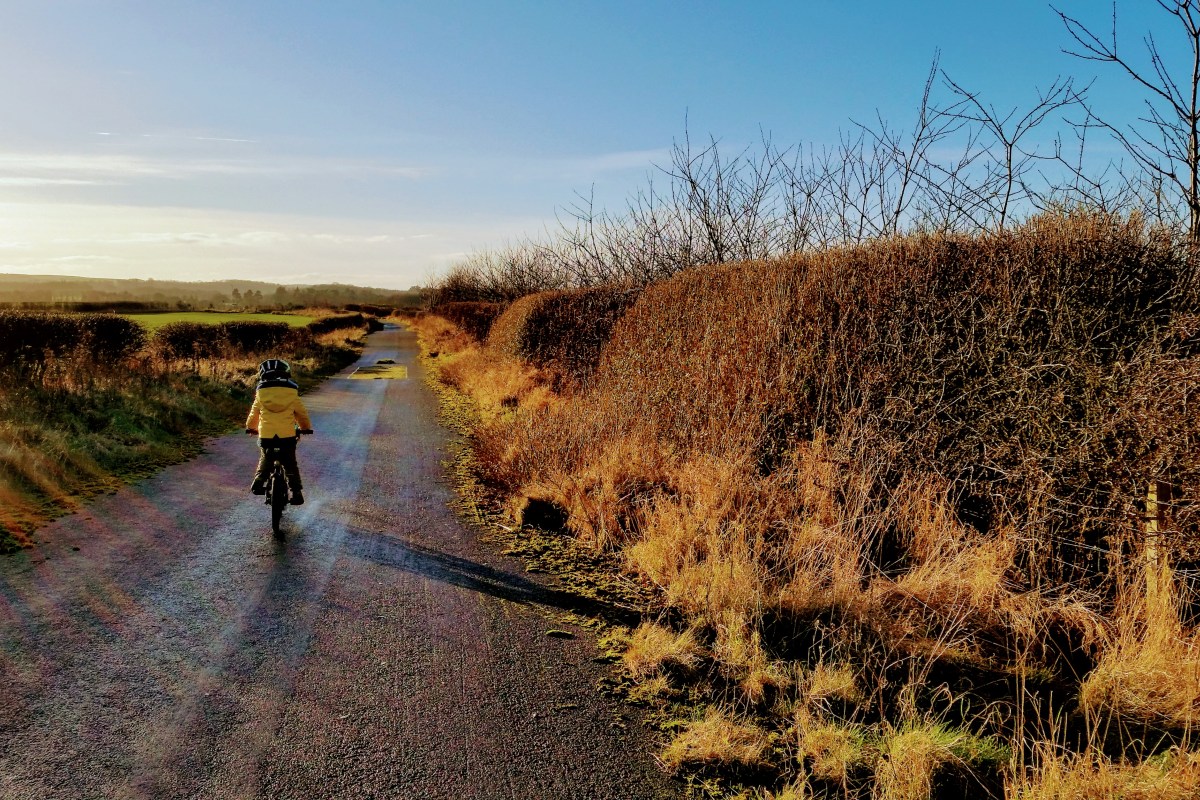
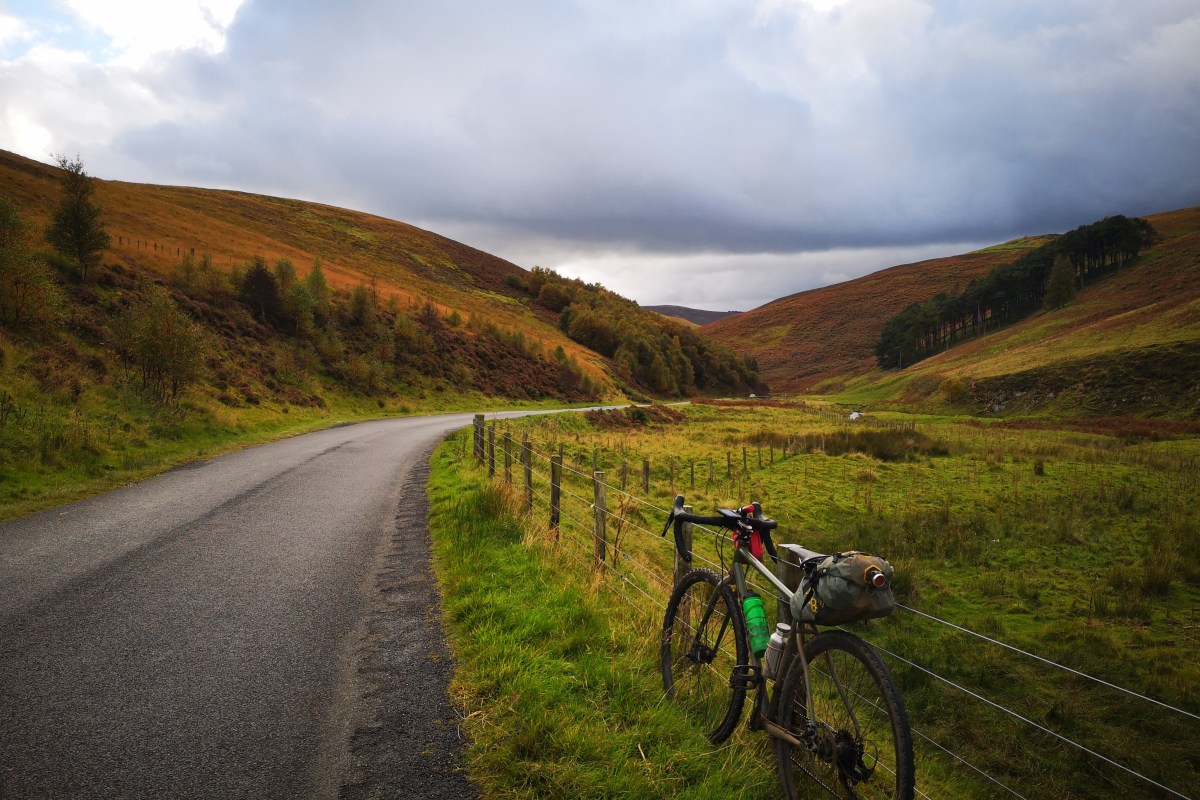
Bike leaning against fence by rural road in lovely valley

This time last year my greatest concern was my ability to carry 5kg of coal on my bicycle, closely followed by the activity of Storm Dennis and the vagaries of ScotRail cycle carriages. This list of anxiety was in preparation for my first cycling adventure of the year with my pal Claire, both of us (perhaps unconsciously) deciding that we’d rather spend Valentine’s night together in a remote wooden hut with no bathroom than with our long-term romantic partners.

The haulage of coal, inclement weather and uncooperative trains were just the start of our challenges that weekend. Our destination – Cadderlie – was infested with teenage boys that had also eschewed romance and were staging a drinking, shouting and stomping competition that started late evening and continued into the night. Claire and I, warmed by our glorious coal fire, pushed the wooden table in our room across our door and settled down on the floor of the bothy to sleep, having decided to flee in the morning for the safety and comfort of an Oban hotel. Had we known what was to come in March we may have joined in the drinking and stomping.

We survived our weekend with Storm Dennis and the teenagers, the unrelenting rain and moments of fear quickly evaporated by the the law of Type 2 Fun. Then Claire and I, like the rest of the world, were confined to our local areas until the summer, trying to work out how and where we could manage a Covid-safe adventure between work and caring responsibilities. 

July was our first opportunity to get away and we used it push the limits of Type 2 Fun by attempting to cycle the Herring Road, an ancient route – between my home in Dunbar and Lauder, in the Scottish Borders – where women used to walk the 30 miles carrying herring in baskets on their heads. Fishwives of the 18th century were clearly made of tougher stuff than us, although we did inadvertently try recreating this feat by carrying our laden bicycles over a bridge, and the innumerable stiles and stone walls on the way to Lauder. Hours pushing laden bikes up grassy fields, with a herd of threatening cows following at one stage, saw our collective strength sapped. We arrived at the Black Bull pub and hotel in Lauder at 9.30pm in a fairly fragile state and incapable of wild camping. By the time we collapsed into comfortable beds we had abandoned our plans to cycle home the following day. After eating all the breakfast the hotel could muster we got ourselves to the nearest train station and vowed that our next adventure would be easier – and go to plan.

We enlisted the help of someone that knew what they were doing for our third adventure, and headed off for the glorious Kingdom of Fife in August sunshine for a proper, mapped route – the Pilgrims Way – that takes you from Culross or North Queensferry to the ancient university town of St Andrews. Good views, manageable hills, organised (garden) camping and with absolutely no shambles in sight we knew we had swapped some of the epic for simply enjoyable.

The plan of going to plan didn’t last and in September we headed off to the Scottish Borders for our second attempt at wild camping. We were still less than 30 miles from my front door, but with deserted roads and the wild beauty of St Abbs Head we could feel the epic all around. We had again picked a weekend with weather that was better enjoyed indoors, and when it came to venturing onto a windy headland to find a remote camping spot we got the fear and scurried back to the corner of a farmers field. Then we worried about the farmer and what he might do if he spotted us – a worry that came to nothing, as worries of this variety are probably destined to. The worst actual incident that weekend was the terribly disappointing soup in a Duns pavement cafe, but we bravely overcame it by eating more cake.

We squeezed our final adventure of 2020 into October, thankfully and unusually booking accommodation ahead, as Covid closed the doors on unplanned adventure. We climbed over the Granites to Innerleithen and the surprisingly good food of the budget Corner House Hotel. This final effort provided a perfect balance of scenery, challenge and cake, with the harder push on the off-road route chosen for our way home, over the Lammermuir Hills, ensuring we wouldn’t be lost and alone too many miles from home if the plan really unraveled. 

There was undoubtedly a significant quantity of Type 2 Fun in our adventures of 2020, created by the weather, circumstances, our ineptitude, inexperience and fears. But despite, or because of that (and I’m not sure which), these are some of the happiest memories I have of an otherwise hard and relentless year. I learned (again) that adventure can be close at hand, and not confined to long trips in exotic places. Through finding the edges of some of my physical limits I discovered that fear and challenge are part of the epic equation, but even when I’m scared and tired I’m stronger than I thought. And perhaps fitting for a weekend that celebrates love, albeit of a different kind, I know I’m deeply blessed to have a friend that regularly chooses to have an epic shambles with me.

Car free in a crisis

‘Is there really nowhere that you want to go, that you can’t get to now?’ I was asked by an incredulous young woman at a conference earlier in the year, the week before lockdown ended conferences as we knew them. We were talking about rural transport issues; having outed myself as purposefully car-free I then had to explain to the horrified teenager that the lifestyle of a middle aged working mother meant that Friday nights were a rare and valued opportunity to see my own sofa, not a time to head out to the clubs, restaurants and bars in the nearest city. I don’t need a car now but, thinking back to my own teenage life in suburban Surrey, I totally understood why she did.


I passed my driving test at 18 and, thanks to the generosity (continuing, as they had paid for the lessons) of my parents, my world widened from behind the wheel of Gabriel, a Nissan Cherry of a similar vintage to me. Gabriel and £10 of petrol every week or so freed me from fear of walking alone on dark nights, from obligations to people I didn’t know well enough to feel safe with and gave me the freedom to choose when and where I went. I loved that car and the independence it gave me and, by association, my younger sister who more than once had to be picked up somewhere ridiculous in the middle of the night. Examination of the parental photo albums has sadly not produced a picture of Gabriel, but this is Bazhov, who followed after Gabriel finally lost his long battle with rust:

I’ve not owned my own car for about 20 years, but between generous partners and affordable rental I’ve had access to a car when I’ve needed one. With a few adventurous exceptions, my car use has been principally for adulting – moving house, obtaining chickens and ferrets*, collecting furniture and stretching the working day by travelling before the first train starts and after the last train has gone. It’s only since the passing of Car Forup three years ago that I’ve made a conscious decision that I won’t be driving again unless there is an actual emergency. I’ve also recognised the privilege of this position, living close to a train station, choosing work that doesn’t require a commute and the income to live somewhere that I don’t want to escape from every weekend.

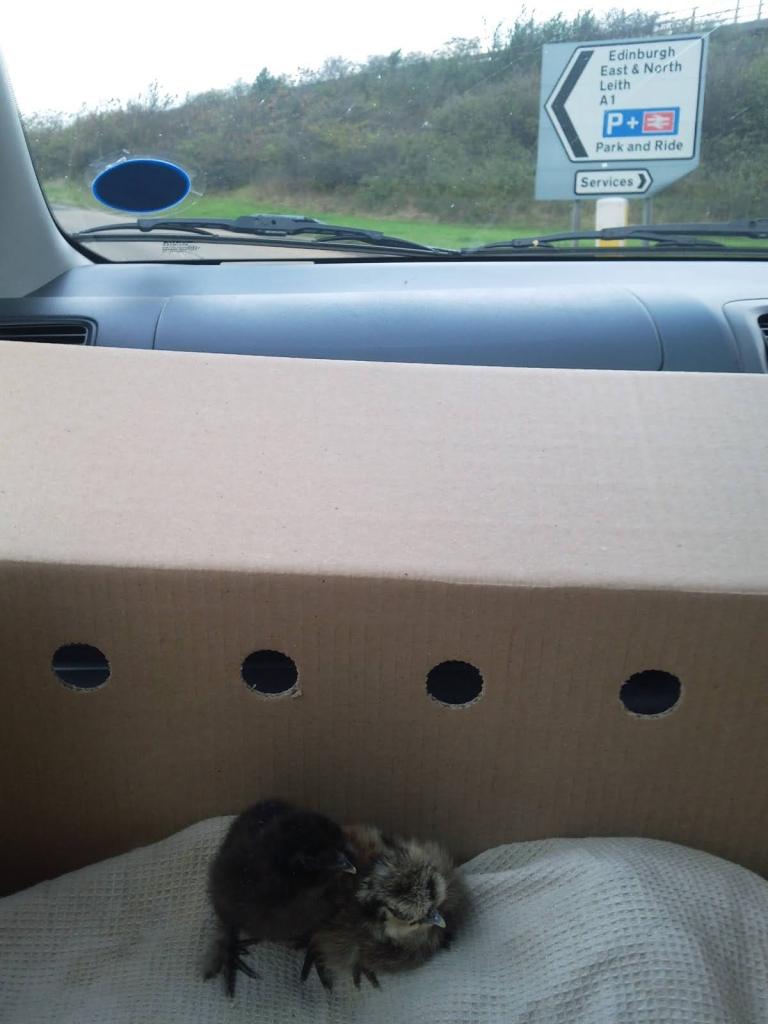
*Chicks, when my (carfree) friend Jane was going through a chicken rearing phase (ferrets obtained separately)

Being car-free has restricted my choices but has bought its own freedoms. I can’t drive into the big city to catch that 6am train from Edinburgh for a meeting in Birmingham, collect anyone from a late night flight or act as a taxi service for small children. I don’t have to parallel park ever again. We’ve made irregular use of the local car club since Car Forup went to the great parking lot in the sky and little has changed since I reviewed our first year of living carlessly. We use the car club less than we expected despite it being easy, cheap and just around the corner. Not having a private car sat outside our house means that driving is always a considered choice because we have to book ahead, even if just an hour before we want it. Over the last six months our overwhelming choice has been not to travel unless we can do it by bicycle.

The different stages of Coronavirus have shone a light on travel and transport choices as we determined what essential journeys were, and how we should undertake them. Whilst the middle classes have been overwhelmingly freed from their daily commutes, the choice to work from home is not available for everyone, with 22% of workers in disadvantaged households working from home full time compared to 53% in more affluent households. Without access to affordable, safe and convenient alternatives the most disadvantaged could be forced into car ownership that they cannot afford.

With car use returning to pre-pandemic levels, we are back to the pre-pandemic conversation about equitable use of our street space, but through a sharper lens that has seen a glimpse of a low-traffic future. Infrastructure can provide safe separation from motorised vehicles, but removing the vehicles from the streets will put people at the heart of our places. We are now looking at 20 minute neighbourhoods and all the positive possibilities they promise, but proximity to services is just one part of the puzzle. We also need to address the current and future levels of private car ownership and how we build low-traffic neighbourhoods.

Car ownership in the UK has gone up over the last 30 years, almost doubling between my teenage years and now, and although the cost of car ownership and driving has decreased in real terms, it is still an expense. We know car ownership tends to increase with affluence, but those in rural areas of all income levels own cars because of the lack of alternatives. Meanwhile, the cost of public transport has increased and bus patronage is falling.

Travel choices are complex but with private cars sitting outside the homes of 72% of Scots, I’m unconvinced we will see a step change in mode share until that number has declined significantly. Unfortunately it’s not enough to enable the behaviour you want, you need to discourage the behaviour you don’t. Even in high cycling countries, with infrastructure that Scotland can only dream of, car ownership and use continues to increase as a function of affluence and lack of other measures to prevent it rising.

When you’re accustomed to privilege, equality feels like oppression

attributed to various people on the internet

Those frothing that we already have a war on cars are suddenly finding themselves the protectors of the disabled and elderly, something that disabled campaigners have raised a sceptical eye at.

Whilst we must protect the mobility and freedom of disabled people, decisions should be led by their needs and experiences not appropriated by those with another agenda related to their own driving intentions.

Our addiction to cars is a public health crisis – contributing to ill health through inactivity and air pollution, as well as death and injury from collisions and worldwide impacts due to climate change – and we should think of it in those terms. All of the evidence tells us we need to reduce the number of private cars on the road, remove the most harmful quickly and prevent people buying the most polluting and destructive. SUV ownership alone is an escalating climate crisis – together they emit more carbon than the UK and the Netherlands combined – and sales have increased to become 40% of all cars purchased in 2019.

The recent UK Climate Assembly Report contained some interesting insights from ‘normal people’ (as opposed to cycle campaigners) on the carrots and sticks of a low carbon future, wrestling with the ultimate chicken and egg of sustainable transport policy: how do we reduce car use and increase active and sustainable transport, whilst not exacerbating inequalities or unduly restricting ‘personal choice’? It seems people won’t give up their cars until the alternatives are more convenient, and alternatives won’t be more convenient (safe or attractive) until there are less cars on the roads where we live, work and play.

Encouraging people to change transport modes by providing and incentivising alternatives found most favour with the UK Climate Assembly members – measures such as investment in public and sustainable transport infrastructure and provision, increasing demand response transport, cheaper public transport, car scrappage schemes and mobility as a service (MaaS) schemes. Whilst some of these options are already available, they all need significant investment to scale them as mainstream options for everyone.

The carrots offer choice and personal agency, but car ownership and use in high cycling countries probably indicates that it’s not enough to help us reach a low-carbon future that will protect the planet for generations to come. With the caveat that low-cost mobility (motorised or otherwise) for disabled people should be maintained wherever necessary, and those in economic disadvantage and rural areas need specific solutions, if we want to reduce car dominance of our towns and cities we might want to look at some of these options that come with a stick attached:

Shift what we think of as normal by banning car advertising: the motor industry spends at least US$35.5bn on advertising a year, and although some of the Climate Assembly didn’t think this was influential on consumer choices, I think there’s a reason why an industry spends more on advertising than the GDP of 91 of the worlds poorest countries. Advertising shapes our world view, even unconsciously, and therefore our attitudes and choices. Let’s stop glamorising and normalising car ownership and driving, or at least point out the harm it does as we did for cigarettes.

And let’s see more of this:

Dutch e-bike advert, banned in France

Make driving pay the full costs: Driving a motorised vehicle is a cost to society and we should make individuals pay to exercise that choice, just as we should for the privilege for storing private property on public land. Implementing higher parking fees, increasing fuel tax, introducing congestion charges and a workplace parking levy and increasing tax paid on the most polluting cars will put a value on our space and make drivers pay a rate that incorporates negative external costs. When all the financial costs are borne by the individual, and not wider society, we might see that it’s just not worth maintaining or storing metal boxes in places where we could have trees, playgrounds, plants, parks and seating instead.

On street trampoline in Amsterdam

Design cars out of our homes and communities: I’m not a planner or road engineer, so forgive my complete ignorance but I had no idea that providing space for three cars outside a home wasn’t considered to have an impact on car ownership levels. This figure (p167 of the The National Roads Development Guide) shows the privileged position we give to cars in new housing developments, with parking minimums instead of maximums, literally driving us towards climate change, congestion and ill health. Instead of this we should be moving towards developments that provide space for people, removing space dedicated to private cars and enabling easy access to walking, wheeling and cycling.

Continuing to design our towns and cities around motor vehicle movements and investing in infrastructure for cars excludes the most vulnerable from our communities, compromises investment in carbon neutral transport and reduces the urban environment to transport corridors. With around 2600 working days left until catastrophic climate change becomes inevitable, we don’t have long enough to rely on carrots.

Love your local

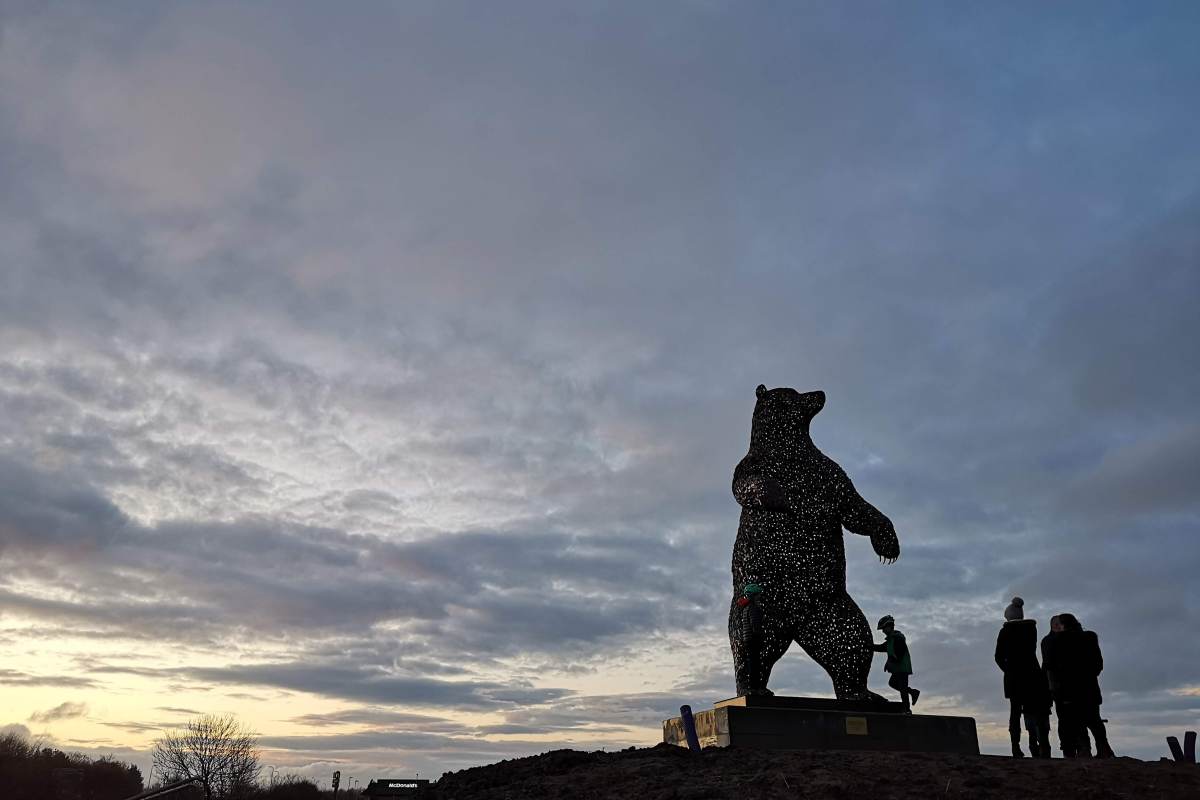
Dunbar Bear in the winter sunset

Love it or loathe it, local has been the only option for most of the world in recent months. I’ve taken my time to love where I live, but lockdown has highlighted the pleasures (and privilege) of calling this part of East Lothian home, where a 10 minute cycle can take you through town to woodlands and beaches against the backdrop of an everchanging seascape.

‘Community’ is a quicksilver and contested concept, but it felt palpable this spring as local volunteers put notes through doors to find who needed assistance and our local school parent council swung into action to ensure every child had a laptop for distance learning. The essential shops stepped up and provided vital provisions in the safest way that they could; our small community-owned grocery swiftly moved to a delivery-only service to prioritise the shielding community and the local supermarket staff worked round the clock to restock, providing a friendly smile at the same time.

We’re all adjusting to a new normal for the long haul now; where our commuter train services are relatively deserted, many of us don’t know when we’ll see the inside of an office or meeting room again and most of us don’t want to return to office working full time anyway. Coronavirus isn’t the only change agent around either; climate change hasn’t gone away and we’re looking straight into recession. It’s now even more evident than ever that we need a more radical change to the way we live now and into the future, providing an equitable quality of life for all over unsustainable rises in standard of living for the few.

The rise in homeworking and reluctance to restart expensive and soul-destroying commutes are perhaps why the 15 minute city and the 20 minute neighbourhood have started to gain attention beyond the usual suspects. If exchanging a long drive for a short walk to work has the same impact as a raise of 40% or falling in love, it’s possible that working where you live will make us all happier, as well addressing climate chaos and air pollution.

Most of us live in a town, or something that looks like one; 90% of Scots live in settlements of more than 500 people although they cover just 2% of our land area, and around 4.5m of us live in settlements of over 3000. Even our cities are more like collections of towns, with clustered services and a clear identity that defines them from the wider anonymity of a city.

Our decision to live in a small town was driven by marital compromise and economic reality, with my husband needing a substantial garden to call his own and I shuddered at the thought of being too far from my beloved Edinburgh. We live on the High Street, where you can find a butcher, baker and candlesticks (if not their maker), a greengrocer, a Co-op, two pharmacies, a sports shop, fishmonger, two charity shops, numerous cafes, gift shops, two galleries, a fancy beer shop and a (peculiarly high) level of hairdressing and beauty establishments. The bike shop is round the corner, we have primary and secondary schools and a three-practice GP centre and a train station. All of the 9000 or so residents of our former royal burgh are within a 10 minute cycle ride of these services, and yet the High Street looks like a car park and our streets crawl with vehicles.

Our High Street has a lovely ice-cream shop, but you’ll get a taste of petrol with your chosen flavour if you stand outside on the street for long. What could turn High Streets like mine from transport corridors where cars loiter to places that people want to linger?

Dunbar and surrounds, showing area within 10 minute cycle of the High Street

Spending so much time in the same few square miles has sharpened my focus on what I love about my town, but also on what I’d like to be different as we loosen lockdown and look to revitalise civic and social life, revive the economy and establish longer-term working patterns that protects people and planet. We need to recreate (and re-engineer) our town centres as places that care for people, that create space to linger, providing sustainable services that don’t cost the earth – and where walking, wheeling and cycling are the natural, safe and convenient choice for most, not just because of a public health crisis keeping cars off the road.

The Town Centre Action Plan Review call for evidence might have slipped under your radar as Spaces for People and related consultations have drawn most of the active travel attention. Despite some years as a cycle campaigner, I confess I’m a complete stranger to the Town Centre Action Plan. Having found it I wondered if the Town Centre First Principle guidance letter got lost somewhere on the way to East Lothian because all I can see springing up is out-of-town development.

Question 8 in the public survey asks ‘What could be done to improve local town centres’ and this will be my response – my Ten Tenets for a Ten Minute Town:

  • Pedestrianisation – it creates the space needed for people to distance and provides an experience that encourages to lingering; business owners consistently overestimate how much trade comes from people in cars but you can’t argue with this:
  • Reprioritise private car parking spaces – for car share vehicles, taxis and disabled drivers that need that access protected, and on-street, secure cycle storage for town centre flat dwellers and short-term cycle parking for shoppers and visitors.
  • Reallocate road space – to accommodate networks of separate and protected space for walking, wheeling and cycling, keeping everyone safe in their space at the pace that works for their needs
  • Designate on and off street loading bays and a significant investment in wheeled trolleys and the time to use them – to reverse the delivery driver priorities that create pavement, cycle path and double parking and the excuses that go with them.
  • Create happy homeworker services – even if we are allowed to go back into offices, it seems that most of us would just rather not do it. Invest in co-working and meeting spaces, provide high quality digital connections and be prepared for people wanting to spend time and money in the community that they live in if you create the right environment
  • Nurture a local wellbeing economy with the places and space we have available in our towns – incentivise the green, healthy and fair so that our small cycle shops can flourish with confidence, local food growers can provide quality produce on an affordable budget and it makes sense to repair and reuse (and not reorder) because the means to do so are on the doorstep and available to everyone
  • Repurpose empty shops into integrated logistics hubs where cargo bikes deliveries can take the strain for those that want their High Street shopping delivered to their doors – it will reduce car journeys and associated pollution and congestion and protect those that need to stay at home.
  • Create attractive and accessible places and spaces that don’t require a financial transaction to use them – benches, pocket parks, play space – so sticky streets aren’t just for those that can afford to sit down but for everyone.
  • Develop accessible transport hubs – that will loan you a bike, non-standard cycle or mobility scooter to suit your individual needs, a helping hand to get onto a train or bus without pre-booking and point for local leisure and tourism information
  • Join up your policy and implement it – Town Centre transport measures need to be in tandem with housing development, which is currently in-built with car ownership as standard, so that you can walk, wheel and cycle from your doorstep into the new and more sustainable normal. Build nothing that looks like this:

The Town Centre Review call for evidence is now closed but the public survey is open until 30 September. As the philosophers Moloko said so emphatically ‘the time is now’ – get responding and tell the review group that the future of our town centres shouldn’t be motorised.

Parking your privilege

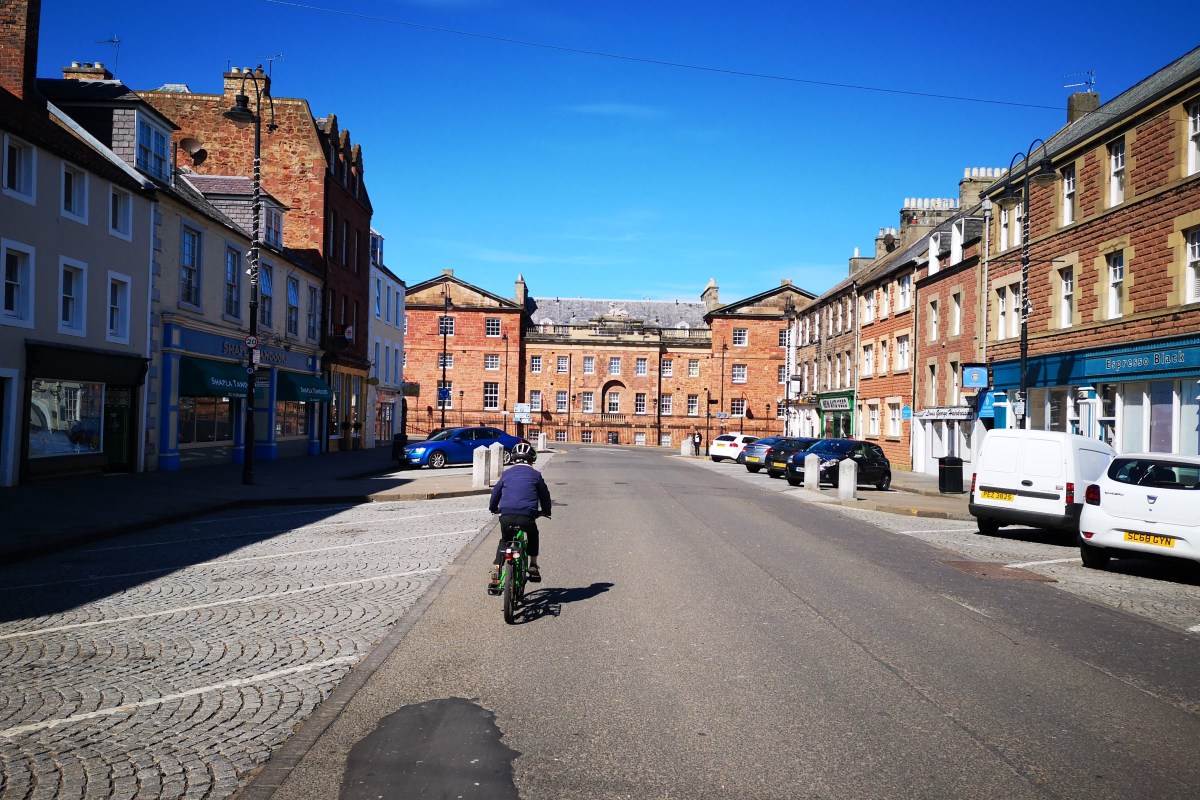
young cyclist on pavement with line of parked vehicles alongside

Hope and despair have been on the rampage in recent months, with commentators wondering if we’ve found the pathway towards kindness, equity and radical environmental change or just keen to throw ourselves back into climate change creation and unsustainable consumption. Our political overlords in East Lothian have positioned themselves clearly for the latter by forcing the council to remove temporary measures for social distancing before most of the cones were even laid out. The faint hope that we might see some creative alternatives to cars dominating our town centres has been crushed by the grumbling of opposing business owners just as we’d started to dream of how we might reuse the space to revitalise our car dominated streets – or simply let people walk safely. In other worlds, not that far away, they aren’t just dreaming of redefining street space, they are providing play spaces, outdoor living rooms and places to just be:

Our transport choices are more complex than the ‘it’s not far, leave the car’ rhetoric that gets plastered on the side of bus shelters. Every harassed school run mum, zero hours care worker and disabled shopper will give you legitimate reasons for their car journey. Part of that reasoning will result from historical decisions to prioritise the movement and storage of cars in our towns and cities – leaving walkers, wheelers and cyclists to battle it out for the leftovers of our streets and public transport too expensive, too infrequent, too delayed, too unsafe or just plain inaccessible to be considered an option by many.

This state sanctioned appropriation of space for cars has created a culture where the storage of metal boxes is prioritised over the health and wellbeing of people and our planet. There is not one other item of personal property that you could leave in the street without causing a passive aggressive note from your neighbours, but you can leave a car sat on a public road for weeks and no-one says a word. Most cars don’t even move that much, spending most of their expensive lives parked waiting sadly for their owners to return whilst they take up space where something joyful, life enhancing or simply useful could be instead.

The Coronavirus restrictions and subsequent easing have brought a fresh edge to the discussion about how, where and why we travel – and also the space we allocate to different forms of transport. It’s been said that the truth of a city’s aspirations isn’t found in its vision, it’s in its budget. The same could be said of its land use – are we investing in walking, wheeling and cycling, greenspace and play space to improve quality of life or are we giving up land to storing unsustainable levels of private vehicles?

Some Local Authorities across Scotland have responded to the Coronavirus with a range of temporary measures to enable people to walk, wheel and cycle safely, increase space for distancing on pavements by removing on street parking and enabling businesses to creatively use parking spaces to encourage people back to restaurants and socialise outdoors on the street; even car loving, gas guzzling Aberdeen is at it:

In East Lothian we have about the Scottish average level of car ownership, with around 75% of household having one or more cars, as a relatively affluent and partly rural area. The town centres of East Lothian do a good impersonation of car parks and during lockdown many cars remained parked on our High Streets despite the closure of almost all the shops, which may suggest that our absolutely vital town centre parking spaces are not taken by big spending shoppers but by residents leaving their personal assets in the street. East Lothian business owners might not be convinced, but there is a mountain of evidence that shows people on foot, wheelchair and bicycle keep the cash registers ringing and not the cars drivers.

We can’t afford to keep investing in cars; if you thought Coronavirus is causing havoc with our lives then you’re not going to enjoy what climate change is offering. It’s not news that air pollution is linked to poor health outcomes in every way possible, and you don’t need a pollution monitor to tell you it’s going to start increasing soon if congestion returns:

Gentle nudges to change behaviour isn’t the radical response we need to a crisis – any of them. We need to prevent a rush back to office-based working, provide widespread and convenient alternatives to private car ownership, deliver infrastructure to enable safe walking, cycling and longer multi-modal journeys, give incentives to swap cars for cycles (not a slightly better bad choice) and to value our land as our most precious resource – not use it for unsustainable levels of storage of vehicles. In Japan’s radical, evolving, imperfect response to limited land space you have to prove your can park your car before you are allowed to register one. What better way to show that land has a value than charge for using it to store private property?

We also need to change the way we talk about car-free cities, parking restrictions and space reallocation, ensuring that those that need to drive are acknowledged front and centre in the narrative. Car free spaces look like exclusion zones when you rely on a car or taxi for freedom of movement and independence.

We get nowhere as non-disabled active travel campaigners if we enter an oppression Olympics or argue about car use with disabled advocates. We antagonise people that should be allies if fail to recognise our own privilege, and I’m ashamed to be seen as part of a lobby that acts in an aggressive way towards a community that is already excluded from our streets in so many ways:

In the work that we’ve done at WalkCycleVote we’ve had conversations with disabled advocates about what creates #Street4All for different people. Whilst we all felt that there is too much priority given to motorized vehicles, it was clear that there are people that feel they need to drive and park, like the 230,000 blue badge holders in Scotland. Disabled people need to be able to travel independently and safely by the mode that enables them whilst we work on fixing the streets and modes that exclude them. But that doesn’t mean all disabled people have or want a car: 46% of disabled people in Scotland have no access to a car, and may not be able to drive, which means it’s vital to invest in safe and accessible public transport and safe walking, wheeling and cycling infrastructure that enables active travel for everyone that wants it.

Now let’s put our action where our hope is and demand radical action that includes and improves our towns, cities and villages for everyone.

Space for Everyone

Dear Cllr Innes and Ms Patterson

Firstly, I’d like to thank you on behalf of my family for the work that you and colleagues are doing to ensure the safety of East Lothian’s population during the Covid19 crisis. I know you must be working around the clock to protect our elderly and vulnerable residents, ensure that our schools continue to provide education online and maintain all the lifeline services that are so desperately needed.

Now we have adjusted to the immediate crisis situation, we are already thinking ahead to a world beyond the lockdown; we know there will be different challenges as people try to re-establish connections with friends and family, get back to work and education within continued social distancing restrictions. It’s vital that decisions are made now that will safeguard residents, and reduce our impact on the NHS, over the coming months.

I’m writing to ask you to consider measures that will create and maintain safe spaces, particularly in our towns, for people as we start this next ‘new normal’ for the following reasons:

Air pollution will impact those already most vulnerable to Coronavirus

During lockdown there has been a reduced level of motorised traffic, and consequently reduced levels of air pollution. Evidence suggests that our shielded communities and most vulnerable residents are likely to be at more risk if air pollution starts to increase, with emerging evidence suggesting that Coronovirus could be transmitted in pollution particles. This new information only adds to the body of research that shows the negative impact of air pollution on human health.

Maintaining low levels of motorised traffic will be vital in enabling our most at risk residents to come out of isolation. In addition, there is evidence to suggest that low levels of car use has enabled more people to cycle safely for essential journeys, as well as their daily exercise, which will have a positive impact on all our health and wellbeing.

Additional space is required for those with impaired mobility to have equal and safe access to services

Decades of land use decisions have lead to prioritisation of motorised transport in our towns and cities, with limited street space dedicated to pavements and separated cycle lanes. Whilst this has always been a challenge for people that walk and cycle for transport, the need for social distancing means it is now particularly difficult for people that use wheelchairs, older people and blind or visually impaired people. Whilst we all have responsibility to be considerate and reduce the risk of close contact we do now need reallocation of road space to provide more room for safe walking, cycling and wheeling, particularly in town centres and along popular leisure routes.

We risk exacerbating existing socio-economic inequalities

It’s true, as the First Minister stated, that ‘we’re all in this together’, but it has been widely recognised that we’re in the same storm, not the same boat; we know that those who are already most disadvantaged will have worse outcomes from this crisis. We know that women and in lower income households are more reliant on public transport, which may carry an increased risk of infection if we do experience a ‘second wave’. Families without adequate space for children to play, people with no private outdoor space and families that do not have access to a car will benefit from additional safe public space to exercise and access services within walking, cycling and wheeling distance from their homes.

Towns and cities across the world are using temporary measures to enable key workers to cycle safely, and others are already looking at a road reallocation revolution instead of returning to ‘normal’.

There are no silver linings to this crisis, but enabling more people to walk and cycle safely, accessing shops and services without the need for a private car would be a long-term benefit to people in East Lothian.

It’s been reported that traffic is starting to return to our roads in some areas of Scotland, and it’s certainly felt that way on my regular cycle routes between Dunbar, Haddington and North Berwick this week.

I appreciate that you have competing priorities, limited resources and are no doubt worried for your own families as well as our communities across East Lothian. But now is the time to act on measures that are preventative and will make a significant difference to the health of our population in the weeks and months to come.

Yours sincerely, and with very best wishes to you and your families

The Forup Family

Normal 2.0

We’re still carrying on here with the aid of cycling and cake but, in the spirit of adaptation to new circumstances, are bringing gin cocktails in to the equation to welcome the weekend and set sail to our beloved Scottish islands – if just in our imagination.

There has been a two week ‘Easter holiday’ respite from the outpouring of Google Classroom, so one source of anxiety has been in abeyance at least, although trying to manage a child whilst conducting back to back Teams meetings probably wasn’t particularly well received by any of the parties getting half my attention. Always late to a party, I’ve developed a deep appreciation for audiobooks and particularly the varied works of David Walliams; his daily readings have provided light relief and distraction for at least one member of our household, although it has unfortunately increased the discussion of bottoms, toilets and associated fluids.

Obviously I’ve got nothing but the C19 version of first world problems; this beautiful and reflective blog by a GP in Hackney details the inequalities that the current situation is compounding better than anything else I’ve read. The daily tweets from Nursing Notes rip at my heart as I carry on avoiding the storm that is taking the lives of so many that already have a life of public service behind them.

The interweb is full of posts about adjustment to ‘the new normal’, a phrase that I’m completely over, despite it being just a few weeks old (see also furlough, social distancing and flattening the curve) as it seems an understated sanitisation of activity that incorporates working from home alongside the ever-present spectre of death. I’m glad to see the proponents of using the ‘great pause’ for self development have been shouted down by people suggesting that getting dressed and not drunk by 10am is a win.

Just four weeks in, and no real end in sight, and the commentary about what we don’t want to get back to has already started. There are no silver linings in a crisis that is costing so many so much, but it’s clear that we don’t want to go back to what was our normal. I’ve seen calls for ‘build back better’, but we need to ensure its not just improving the seating arrangements on the Titanic we were on. A just recovery will require a complete revolution in how we use our resources, for the benefit of all and not the few, in alignment with planetary capacity.

It’s probably no secret that my contribution to almost all issues, local to global, is that cycling is probably the answer. However, I’m well aware that asking our local authorities to do anything other than cope with providing essential services to the most vulnerable could be seen as insensitive. But looking at our streets it’s never been more clear that space allocation is set to prioritise the movement and storage of metal boxes, and not people on foot, bicycle, scooter or wheelchair.

If we don’t act now we risk coming out of lockdown straight into carmageddon and back to its negative impact on our long-term health.

My Twitterverse is an avalanche of the emergency responses other countries are making to provide more space for safe walking and cycling, and the long-term opportunities to create better cities that enable activity and access for all. I know those conversation are happening in Scotland, but we all need to play our part in supporting our politicians and officials to make choices now that will create the path to the future we want.

Pedal on Parliament are calling for #SpaceforDistancing, as enabling people to choose walking and cycling as lockdown ends will be vital in safeguarding the health and wellbeing of communities across Scotland. Out on our daily exercise yesterday it didn’t take long for my mini-campaigner to suggest pavements and footpaths around our town that aren’t adequate for safe distancing. Rest assured we’ll be practising our handwriting skills on this topic shortly.

It seems like there’s no time to waste, and reaching out to our decision makers is vital, but we also need to remember that there is a person behind every public sector and political social media account and email address, a human that is also worried about the future. They could be fearing for their key worker partner or scared that their parents won’t see the other side of this crisis. They could be covering for unwell colleagues, or simply overworked in our strained public services. In our passion for progress, let’s remember to be kind too and try to be the people remembered for compassion in a crisis – not just critics.

Keep calm and carry on with cycling and cake

At the time of writing cycling and cake are both legal, but judging by the media commentary on the Sunday sunshine tempting Londoners out of their homes the cycling element might not last for long.

Two weeks into lockdown and we are well aware of our household’s privilege, with a home that has enough room for solitary confinement, continued employment and sparsely populated, glorious outdoors available on our doorstep.

Like many households not yet in the eye of the Coronovirus storm, we are trying to keep calm and carry on by juggling work, home learning and monitoring the notifications from the local community resilience group. We each have our (different) preferred form of exercise but the Lesser Spotted Cycling Husband has gained some moral superiority as his is a manly display of digging for victory.

Being middle-aged with a prematurely born primary aged child has proved to be a reasonable training ground for coping with a global pandemic – we can wash hands with the best of them, understand that physical distance keeps you safe from people incubating disease and have not gone to a public house on a Friday night for almost a decade. We also know what it is to fear for the life of someone you love, and that placing your trust and hope in the NHS is rarely wrong.

The internet is awash with advice on how make best use of this pause in ‘normal’, but I’m finding that being in a pause is quite enough. At work I’m wading through the paperwork to ensure that we can soon provide useful and safe cycling services to key workers throughout the crisis. At home (conveniently co-located with work for the last four years) I’m trying not to let the unending flow of emails and learning activities into my son’s Google Classroom account give me parental performance anxiety.

To combat stress I’m relying on cycling and cake, having found through long-term use that both help me keep the balance I need to be a reasonable wife, parent and colleague. State sanctioned exercise once a day in the form of cycling feels slightly virtuous for once as it’s appeared as an actual directive from both NHS Scotland and Scottish Government.

The cake is perhaps less obviously virtuous but, given that my son’s interest in the contents of his Google Classroom is the inverse of mine, we’re looking for engaging learning activities in the wild and ‘baking’ has been the only activity that has ever induced him to voluntarily write anything down. We have already produced two cakes, pizza and a set of scones (of dubious quality) so at this rate we might manage enough content for a Coronavirus Cook Book by the end of lockdown, if absolutely nothing else.

Life has changed immeasurably, and perhaps forever, in ways that we can’t yet know. We do know that those already disadvantaged will come out worst from this global crisis, and some are just realising that ‘key worker’ is a term that applies to people that we pay the least. At the moment I’m just going to wait awhile in the pause, braced for what might come and with gratitude and awe of those that are fighting head on for us all.

Show me the money

Over the next few months Transport Scotland will be putting together a list that will be the focus of transport investment over the next 20 years. The catchy titled ‘Strategic Transport Projects Review (STPR) 2’ is an opportunity for Scottish Government to put its vision for a carbon neutral Scotland by 2040 where it matters – in the budget.

As part of the decision making process Transport Scotland are asking us to respond on an online survey, detailing issues about everyday journeys and satisfaction levels with different transport modes. My lovely work colleagues have put together some guidance to help supporters complete the survey, particularly in identifying the five strategic priorities that would make a difference to travel choices in the future. 

I consulted thoroughly with mini-campaigner over cake and ginger beer, and the following are our five priorities with some examples of where more work could be concentrated to achieve Scotland’s vision of a fairer, healthier and inclusive country. 

Design and build a high quality walking and cycling network

Invest in separated cycle lanes on urban main road routes and shared paths in rural areas, forming a high quality, safe and attractive walking and cycling network across Scotland for everyday transport and leisure journeys – designed with communities and ensuring that it’s accessible for everyone.

We know what has influenced significant modal shift change in other cities around the world and Edinburgh and Glasow have started to learn from it. They have shown the political leadership and resolve to transform, often in the face of criticism and outright abuse.    

Ensuring that place based approaches to transport for our cities is vital, but many of us live, work and visit outwith our two major cities and we need safe, connected and viable sustainable and active travel options too. 


This is our local National Cycle Network route, where the shared use path comes out onto a road that is also used by motorised traffic coming straight off the A1. The Local Authority is slowly improving the route, but it’s piecemeal, as funding and capacity become available. More investment in strategic walking and cycling routes will have direct economic benefits, as well improving the health and wellbeing of locals and visitors alike.


Our islands are some of the most wonderful places to explore by bike but last summer in Orkney we found there were few appealing options to avoid the fast A965 to get from Kirkwall to Stromness. Concerned locals suggested putting mini-campaigner alone on the bus, rather than attempt even the shortest section of the main road on bikes. We chose a long detour, put on our Big Girl Pants for the couple of final miles, and I aged several years in the process. The local authority has this route on a plan, but without funding that’s where it will stay.


Close the gaps in the walking and cycling networks we have

Invest in the construction of the short links that communities have already identified, using compulsory purchase powers if necessary and provide capacity and resources for local authorities to deliver and maintain them.

The Drem Gullane Path Campaign deserve cycle campaigning’s highest honours for their patient, persistant and pleasant 14 year effort to try and get a path between their two villages. At this rate I will have overseen the growth of a small clump of cells into an adult human before they get the four mile link they need to avoid walking and cycling the dangerous main road. It should haven’t to be this hard should it?

In my own neighbourhood a new cycle path has been built, linking new houses to a supermarket and a safe route to our primary school. But the section under the railway bridge belongs to Network Rail and apparently they are happy that it’s a mud bath, likely to prevent many people from attempting to walk or cycle and encouraging them to jump in the car.


Make walking, wheeling and cycling attractive, safe, convenient transport options in our towns and cities – for everyone

Invest in a programme of street audits, focusing on street clutter, pavement conditions, tactile paving and crossing with funds for repair, upgrade and replacement – reducing conflict by ensuring that pedestrians and cyclists have clearly defined spaces that are safe and protected from motorised traffic.

Last year saw a revolution in my thinking about how we design our cities and communities, coming late to the news that our cities and towns exclude many of the most vulnerable, including the blind and visually impaired, wheelchair users and people that use bicycles as mobility aids. 

We need to ensure that safe space for cycling doesn’t compromise the needs of pedestrians; our #5GoMadInFrance adventure last year gave us a glimpse into what happens when you mix pedestrians and cyclists into crowded spaces amidst the bustle of a global city – elderly ladies shouting ‘Paris merde!’ at you in the street in frustration and anger

Radical assessment of barriers to integrated, accessible transport – implementing a suite of measures to enable transport modes to support increased active and sustainable choices for everyone

Invest in expertise and infrastructure to enable easy and affordable interconnectivity between walking, wheeling and cycling and onwards journeys by bus, train and ferry.

I was looking at some old cycle touring photos recently and it occurred to me that getting my bicycle on the 08.56 train from Dunbar is now more difficult than it was strapping my bike to the top of a bus in Tamil Nadu. 

You can read about my frustrations with trains from five years ago and unfortunately it’s not got any better. I’m looking forward to the new carriages operating on the Oban line and hoping that this will inspire a revolution in bike-train integration.

If you think accessing public transport with a cycle is difficult you should follow Dr Amy Kavanagh, Gregory Mansfield and Lady Grey-Thompson in their daily challenges to simply go about their lives independently. 

And whilst I’m here I think making all train stations accessible for blind and visually impaired people would be a good too:

Ensure that sustainable and active travel is prioritised from the start of all new developments (housing, health, employment) and reduce the need for travel, particularly via unsustainable modes 

Invest in whatever the hell is needed to join up our regeneration, place, climate, health, environment, equity and transport agendas and actually implement our policies on this stuff.

Can you tell I’m frustrated at this stage? We have the talk, now let’s do the walk.